Art Under Fire
Statement by MFF
I do not work in conditions suitable for art.
I work in conditions suitable only for survival.
There are moments when creation does not accompany life, but stands against it — when tools still lie scattered by the shockwave, when the wall carries a fresh wound, when electricity has vanished and time hangs suspended between two explosions.
This is not metaphor.
This is not a dramatic posture.
This is the physical environment in which my work exists.
Art is often spoken of as choice, as freedom, as privilege.
Here, it is closer to endurance.
We work when the city is dark.
We work when air-raid sirens fracture thought.
We work knowing that the next strike may erase not only the sculpture, but the hands that shape it.
And yet we continue.
Not out of heroism — but because to stop would mean surrendering meaning itself.
I do not create under bombs to demonstrate resilience.
I create because destruction must not be allowed the final word.
These works are not born of comfort, nor of safety, nor of contemplation.
They are assembled in darkness, fragment by fragment, from weapons meant to kill — transformed by human hands into forms that insist on dignity, memory, and life.
To those who create meaning, who withstand the blow, who preserve dignity and continue real work even in darkness — literal and moral — this labour requires no explanation.
It exists because it must.
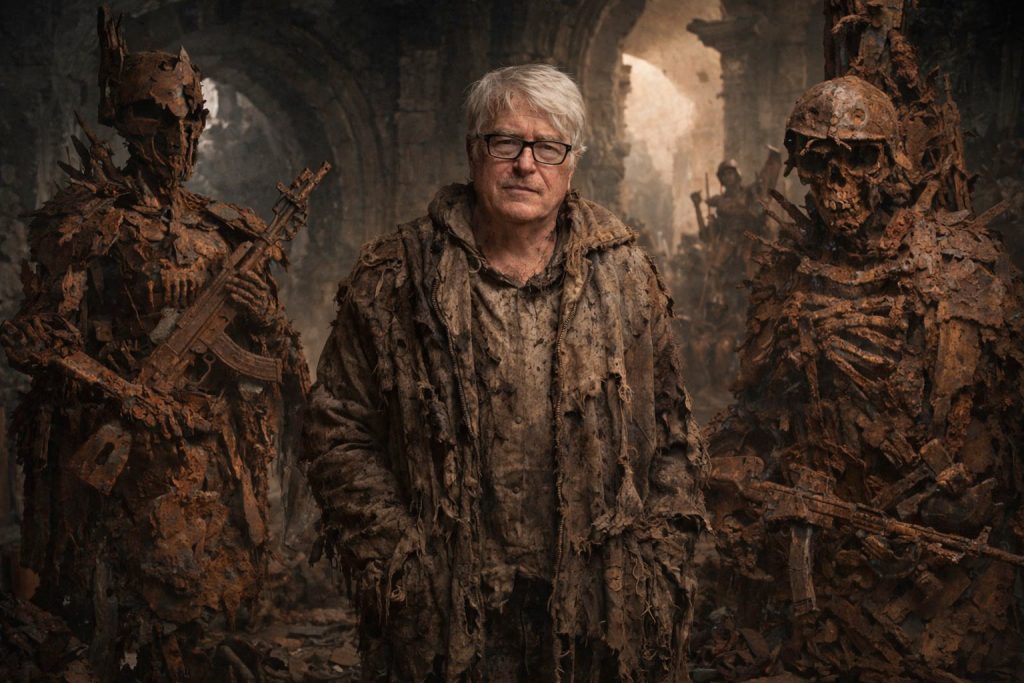
Conceptual visualisation. Amid the ruins, the artist stands between the remnants of war — transforming death into memory, and memory into form.
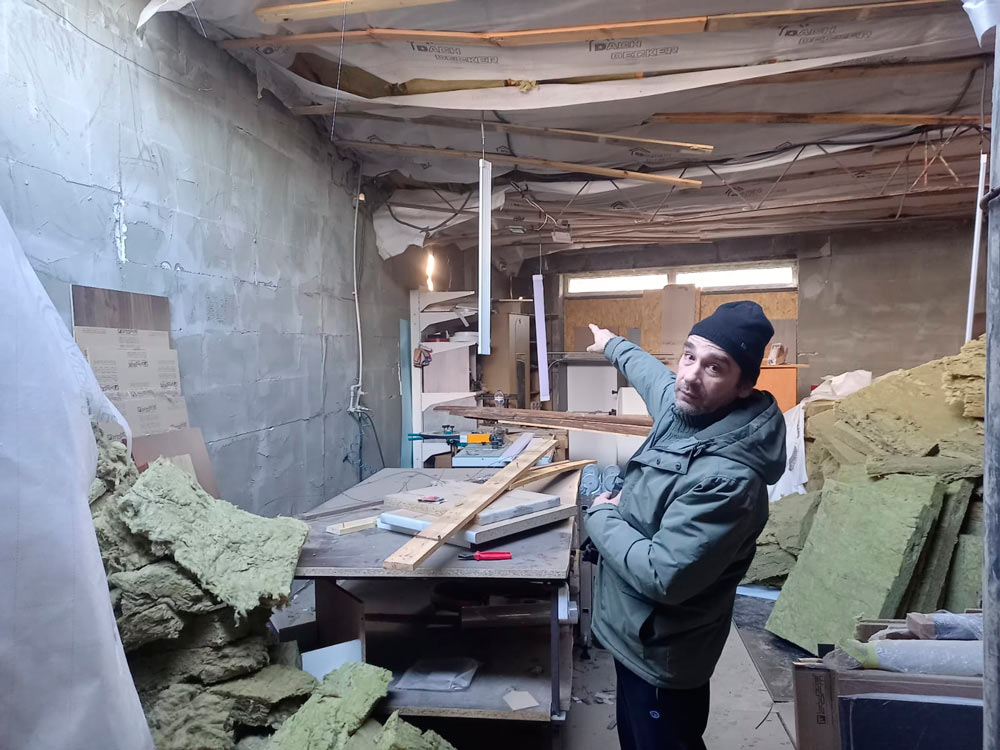
Odesa. Workshop within the impact zone of a drone strike. 20 December 2025.