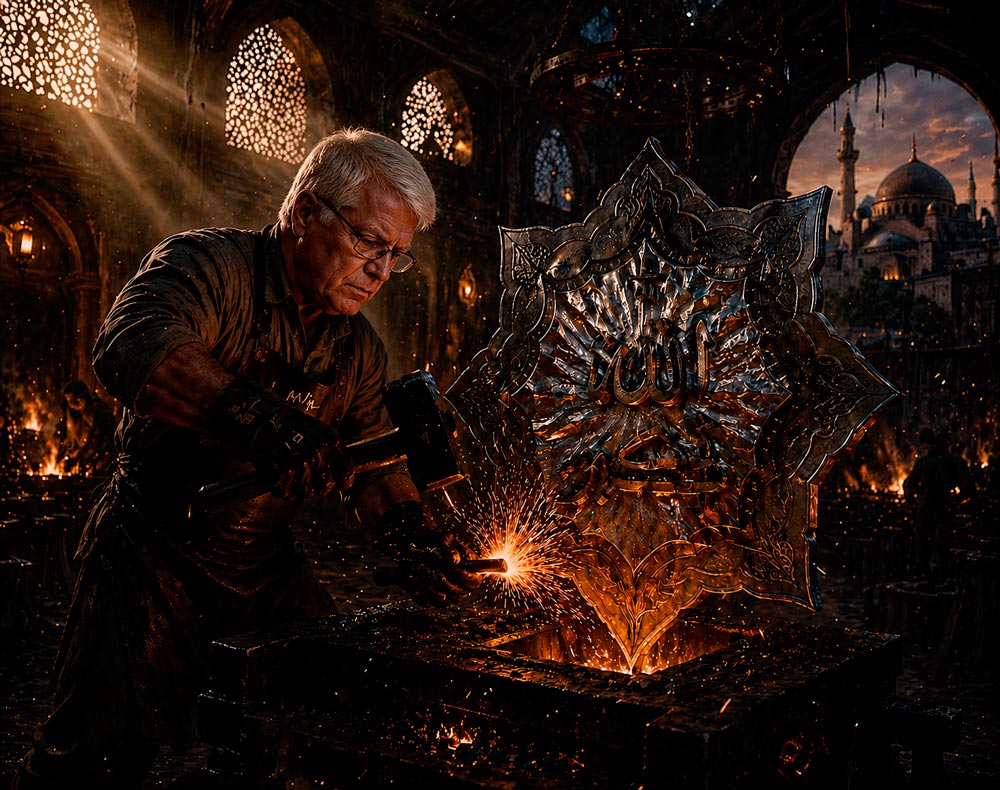
This gallery is updated as Allahu Akbar progresses
Origin of Matter
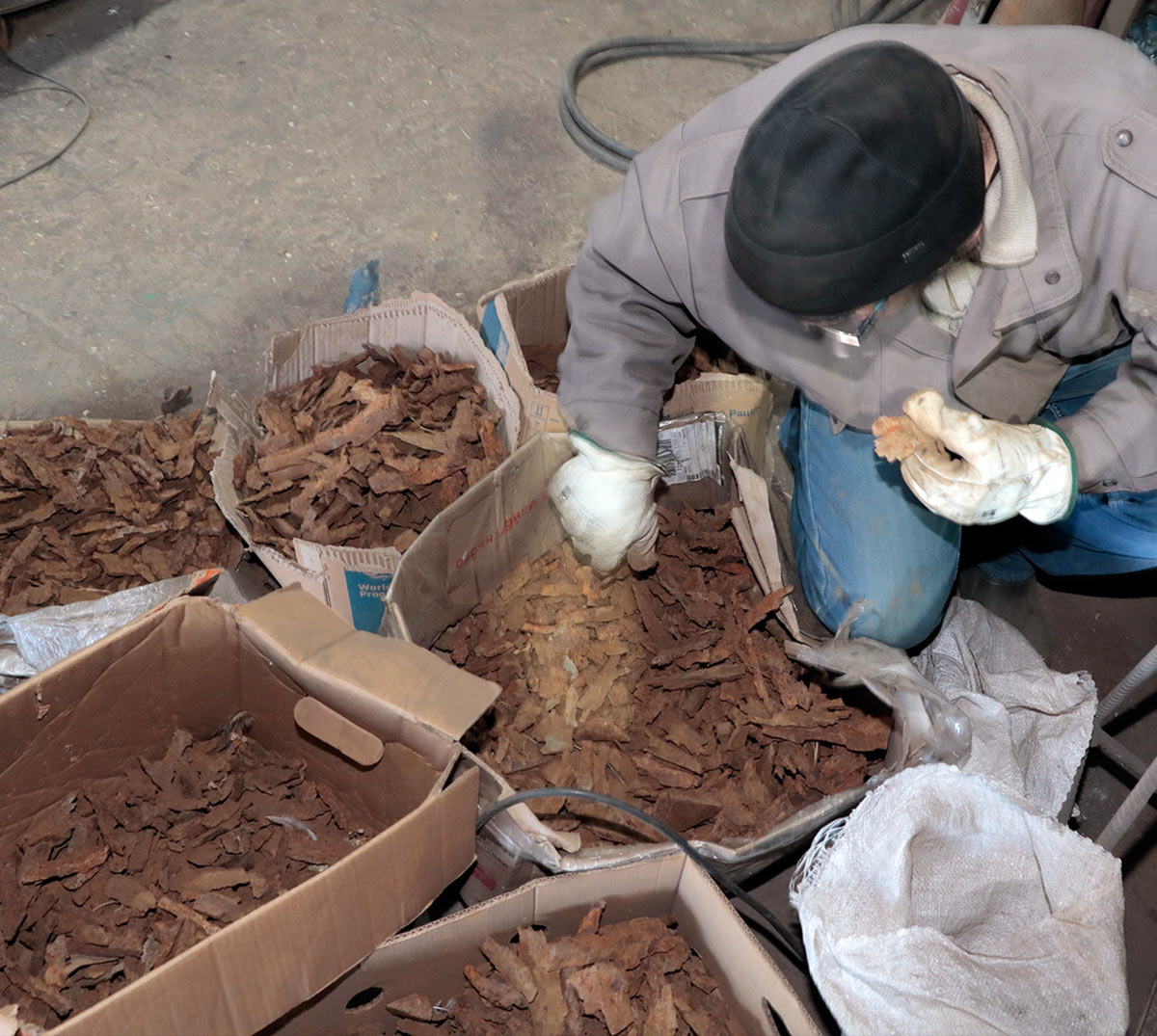
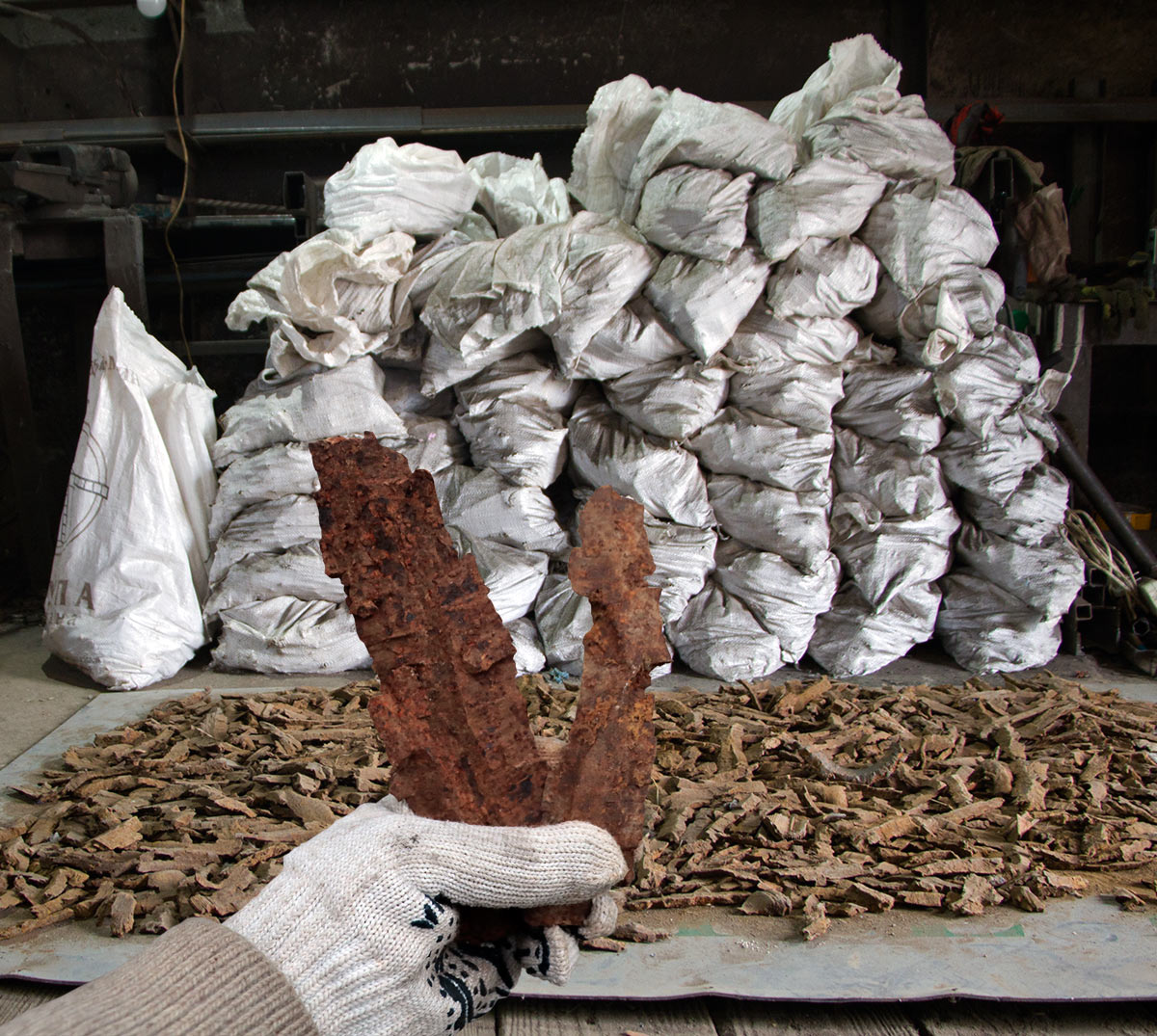
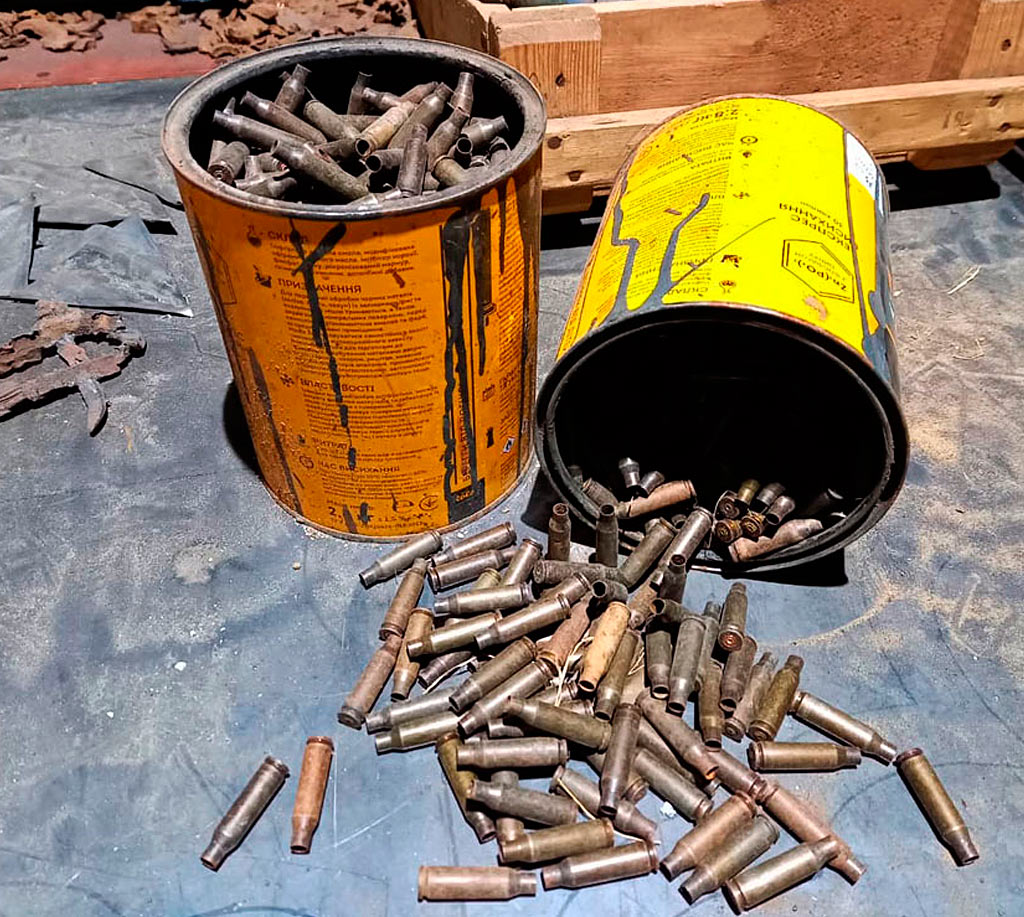
Fragments collected from the battlefields of Ukraine
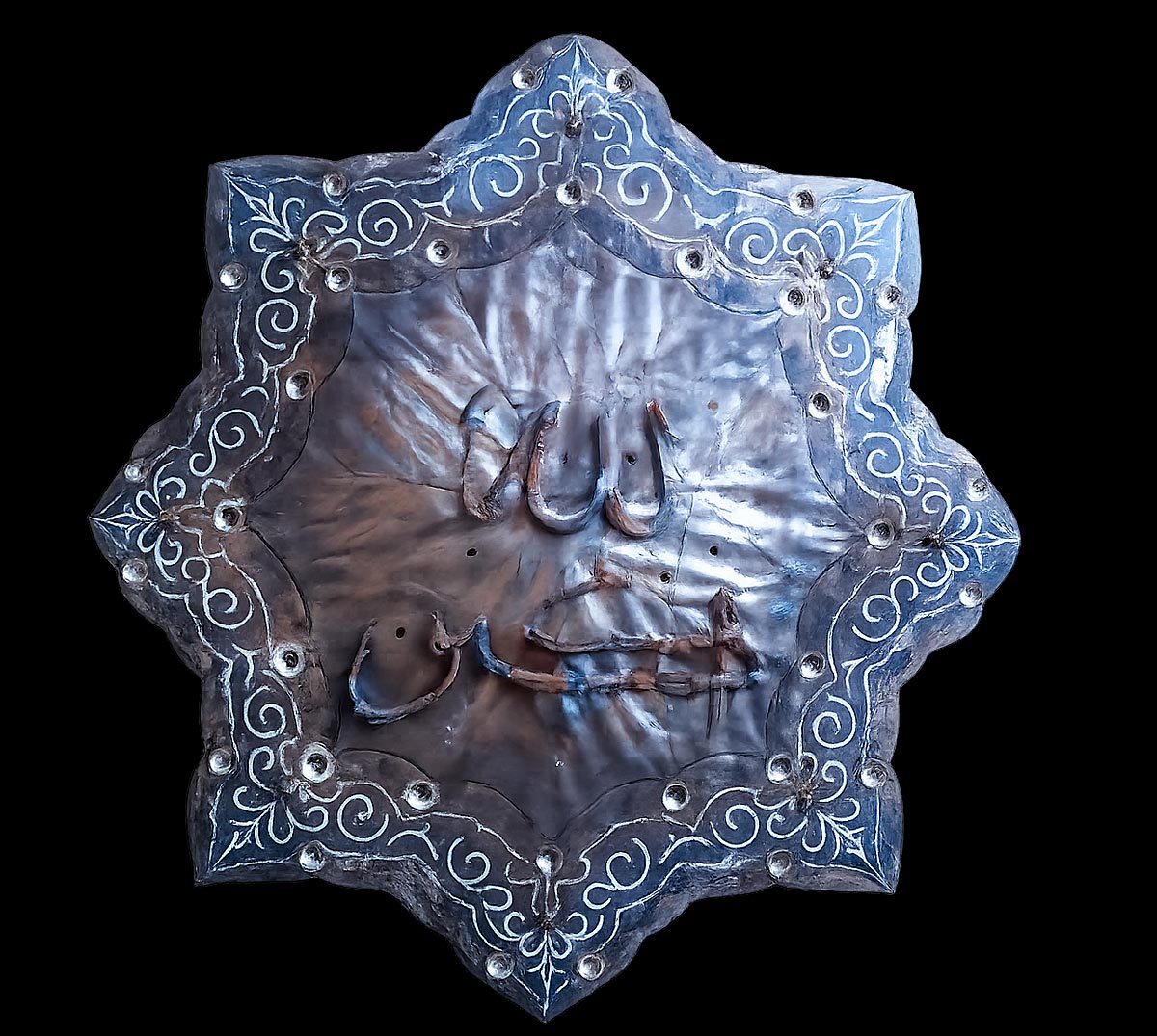
Odesa, 2025-2026 — Creation of Allah al-Akbar
The Construction Principle of the Artwork
Overall Diameter: 950 mm Materials: Constructed from authentic 23 mm ammunition casings, fragments of artillery shells and mortar rounds, and 5.45 mm cartridge cases. Finished with nickel plating and 999.9 fine gold.
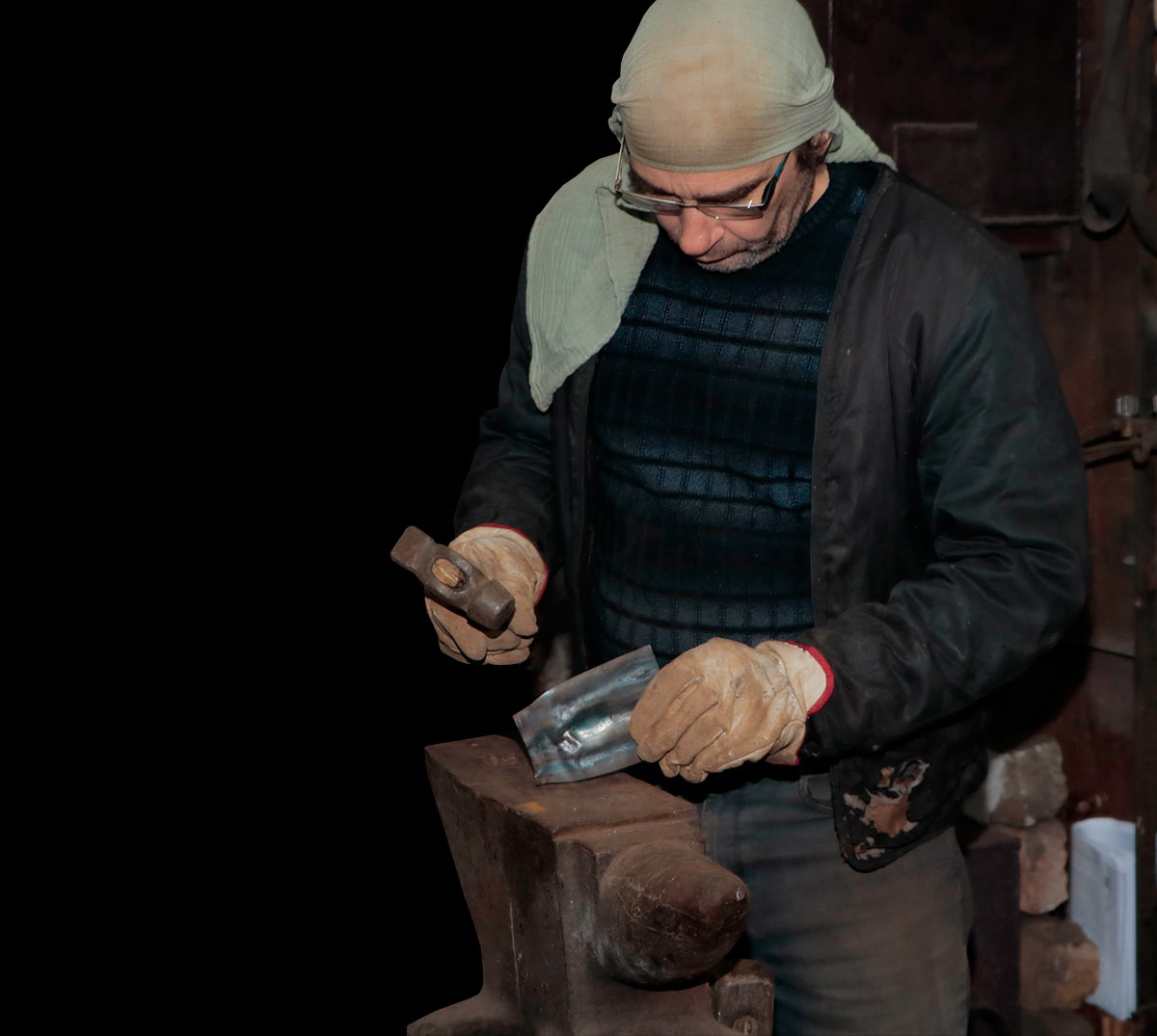
Viktor Bielchyk examining shrapnel fragments collected from the front lines.
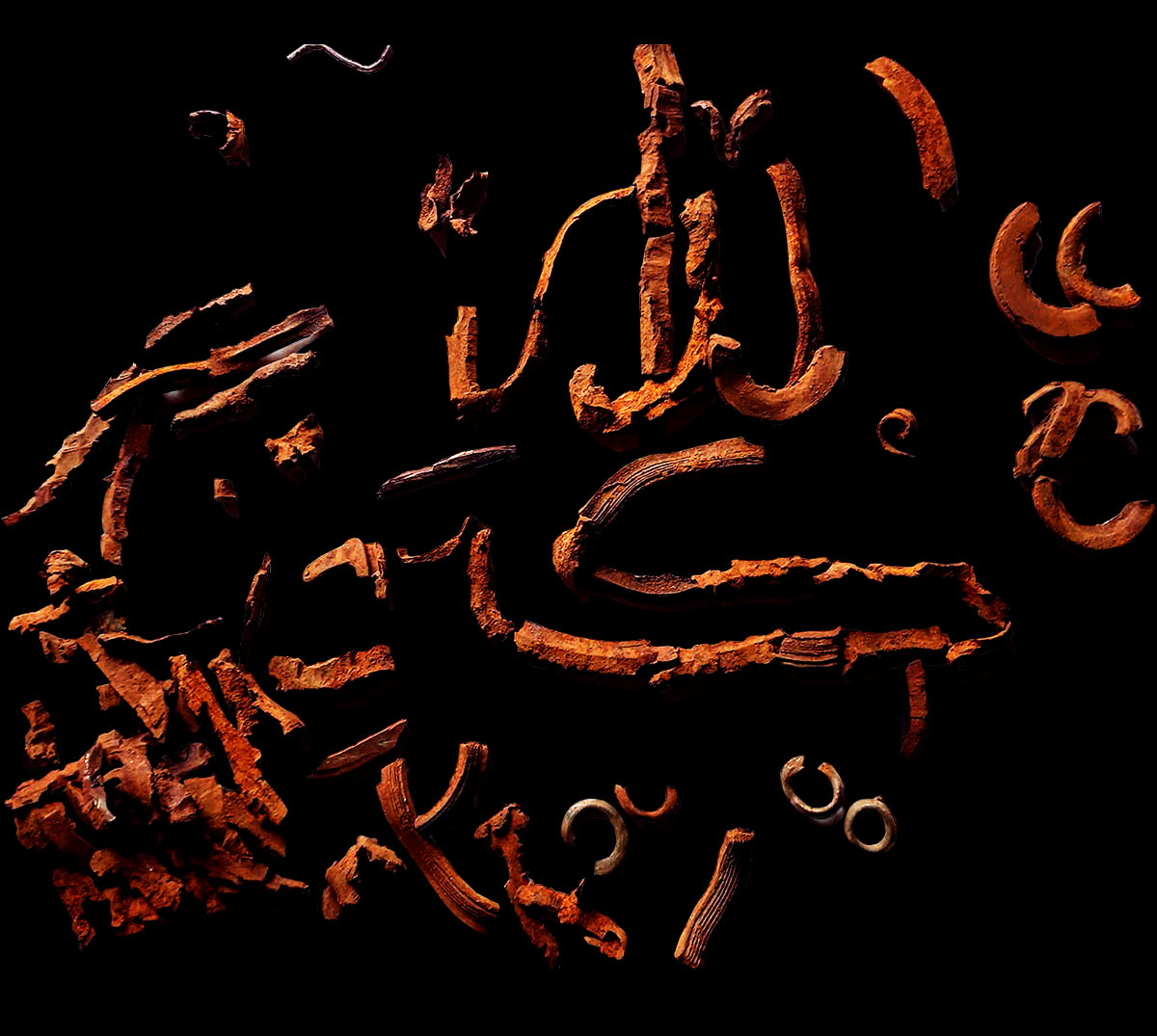
Careful selection of precisely shaped fragments is the key to Ashes of War.
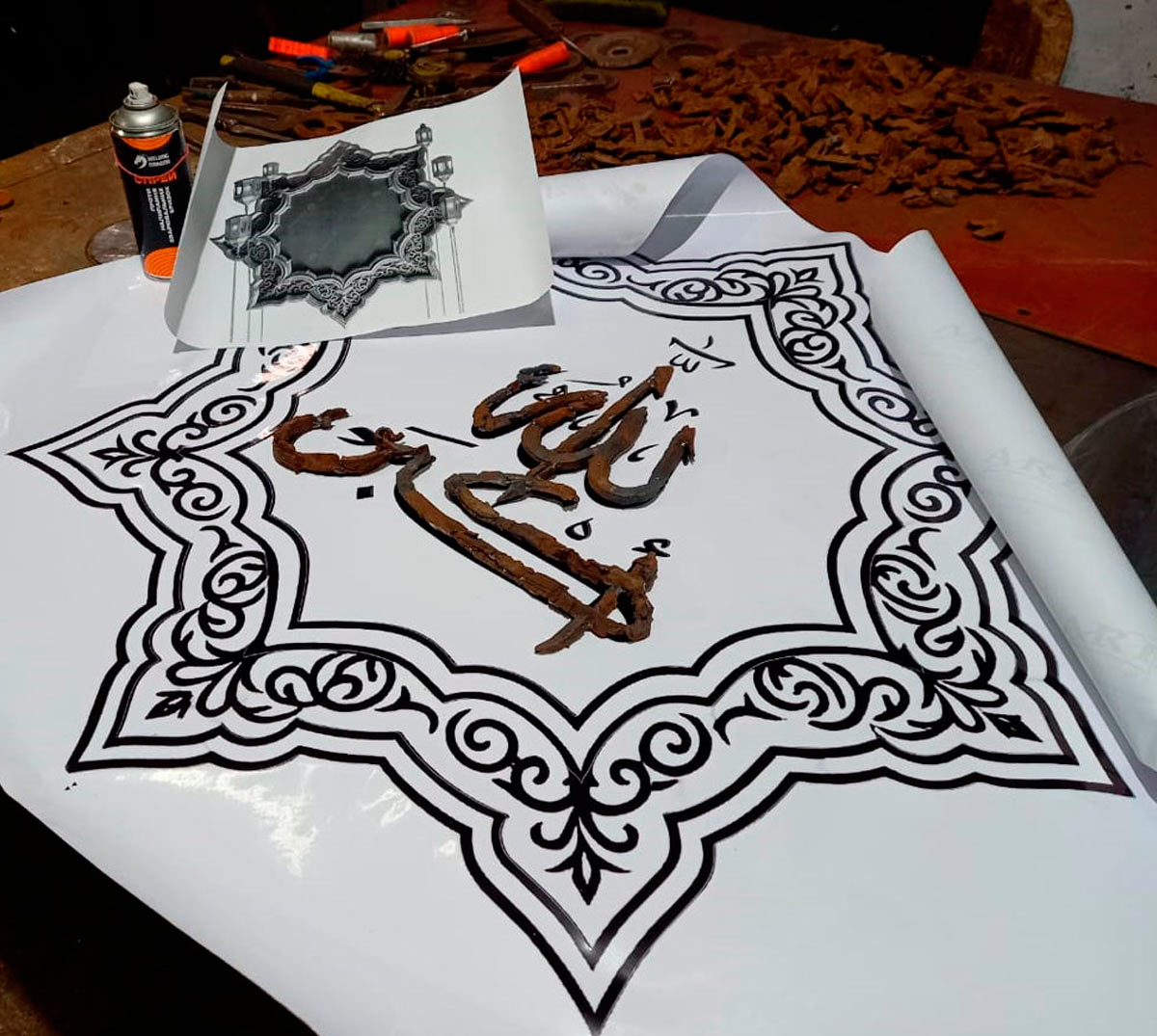
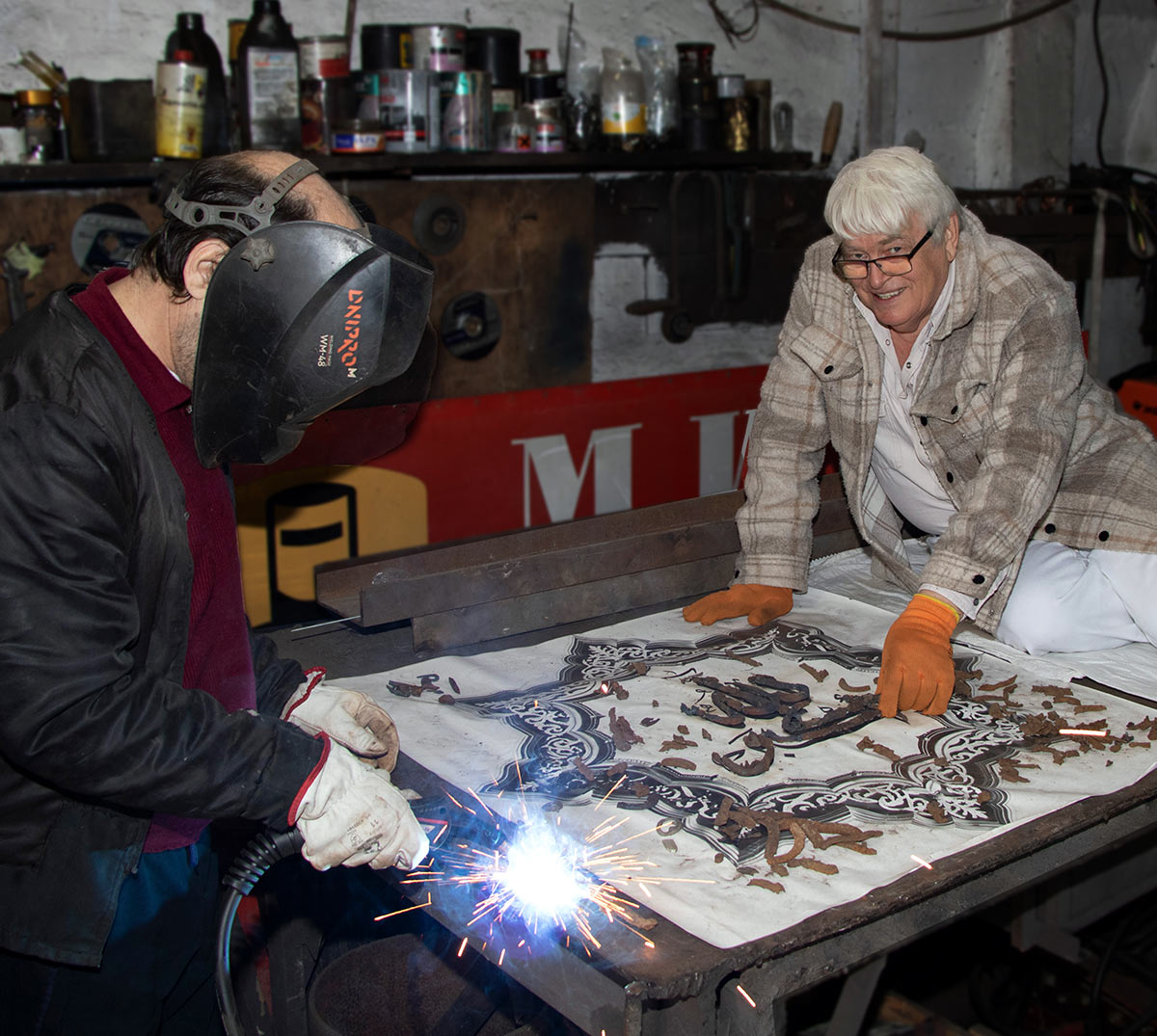
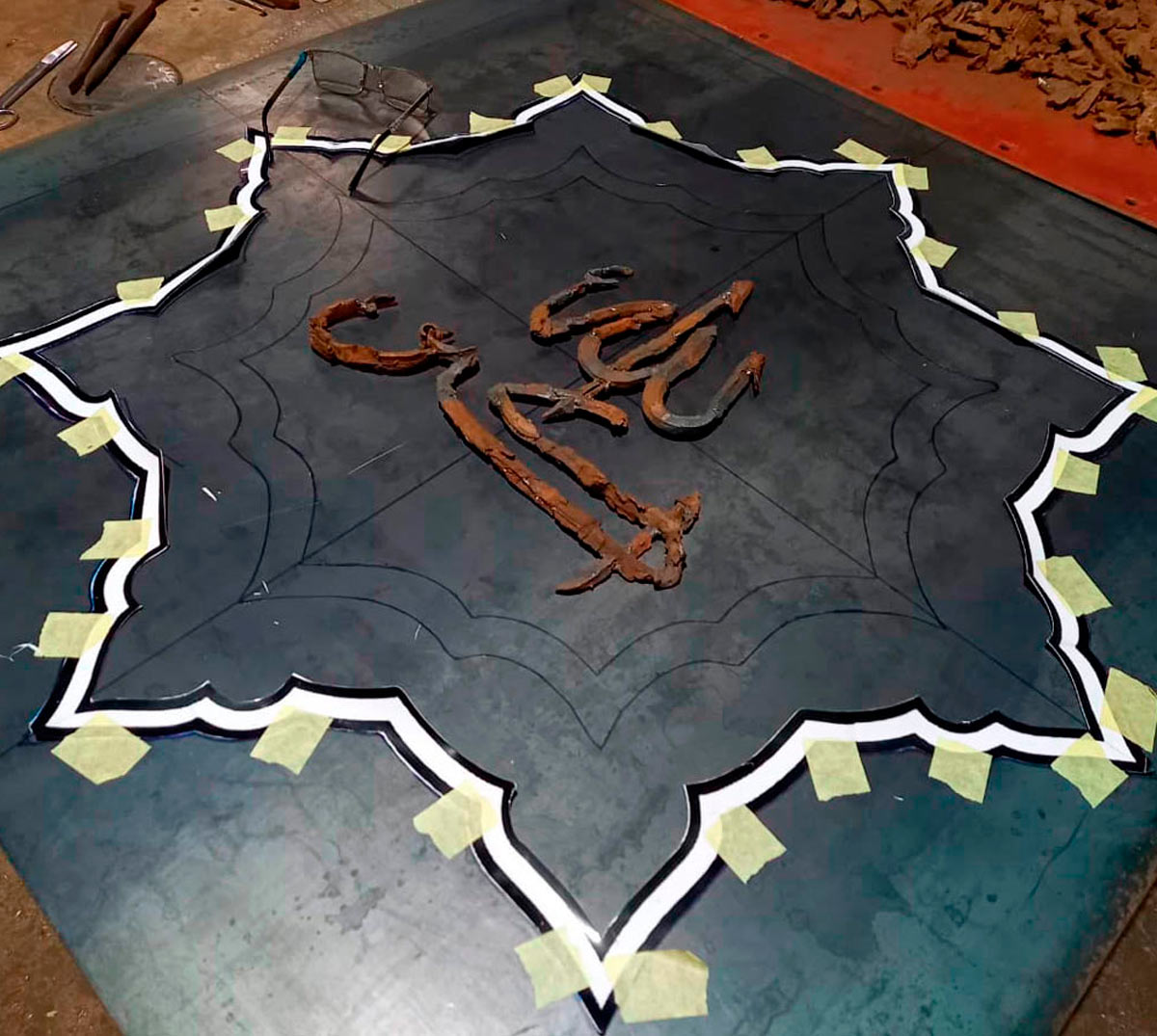
Fragments are laid onto the working sketch, following its design with precision — a principle of Ashes of War.
Step by step, death-bound matter is transformed into form.
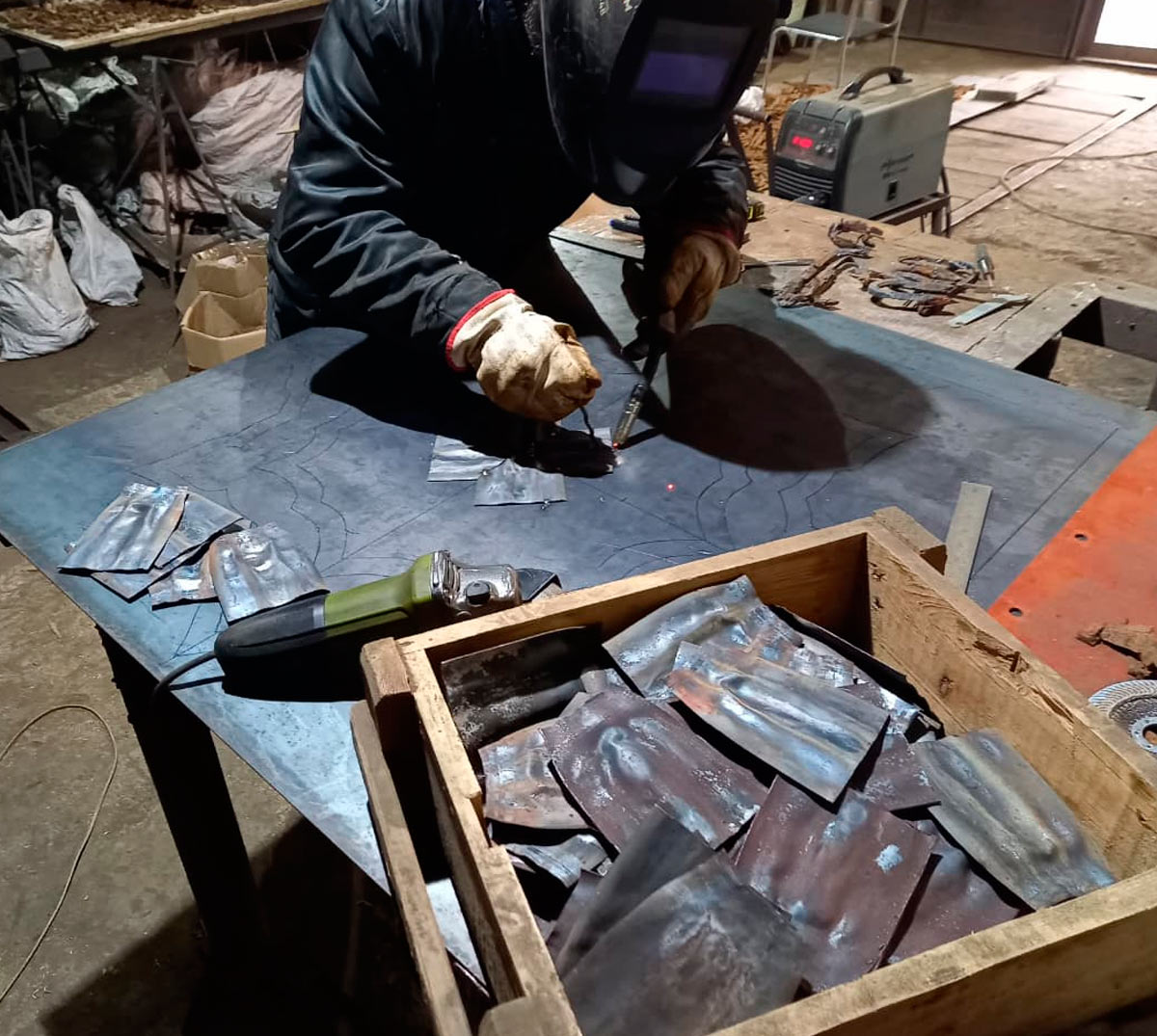
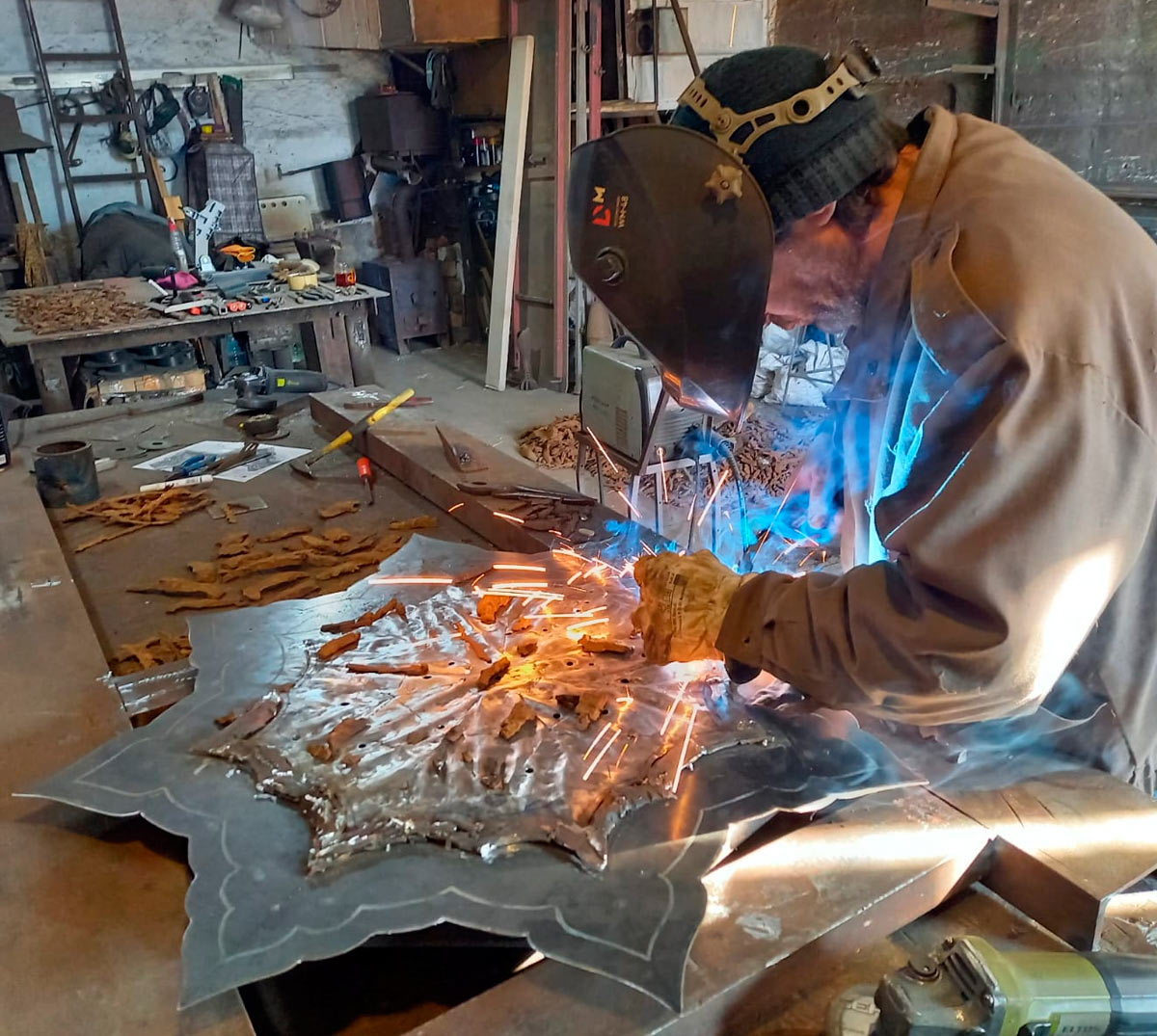
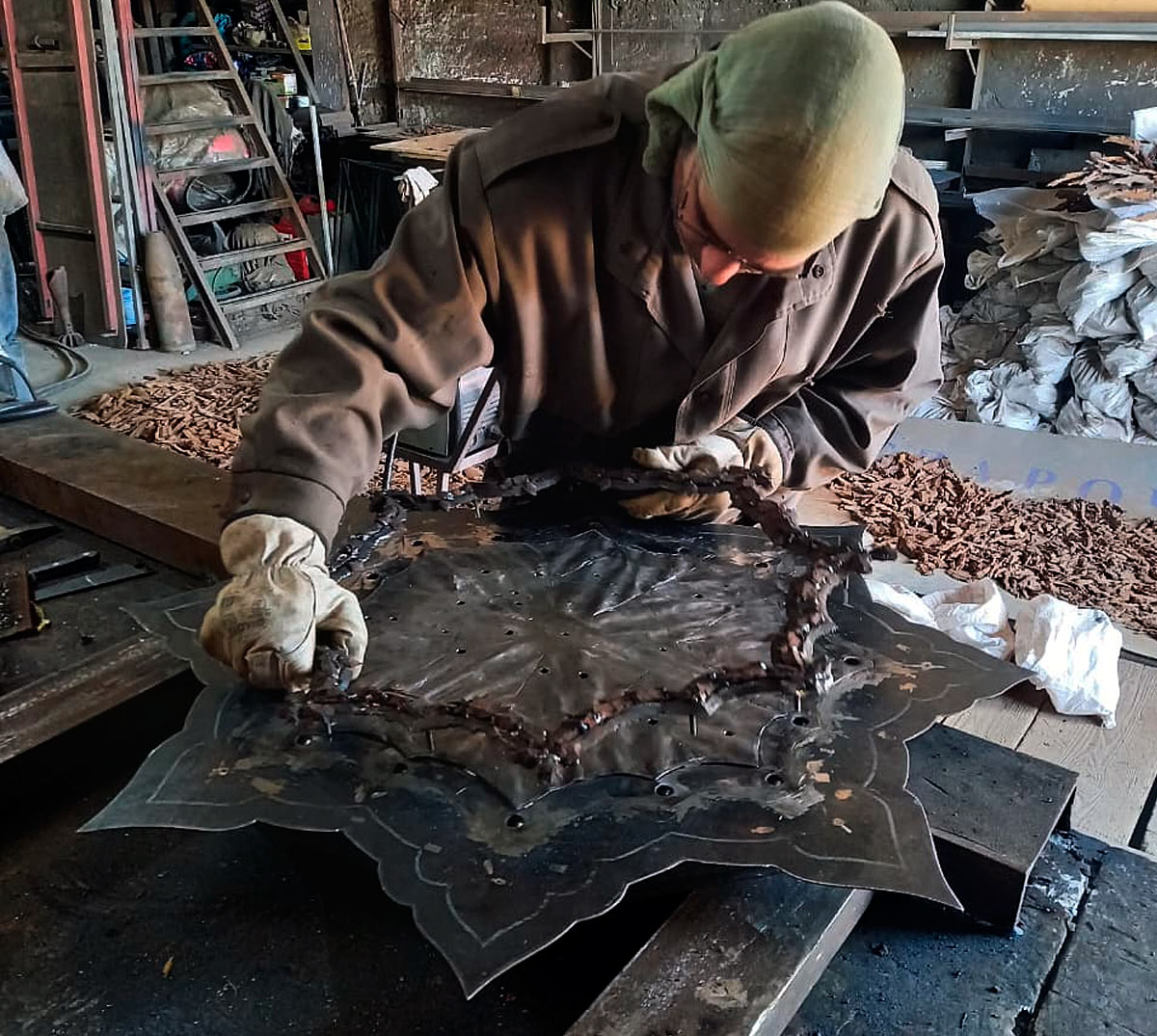
Collected fragments are joined through electric welding.
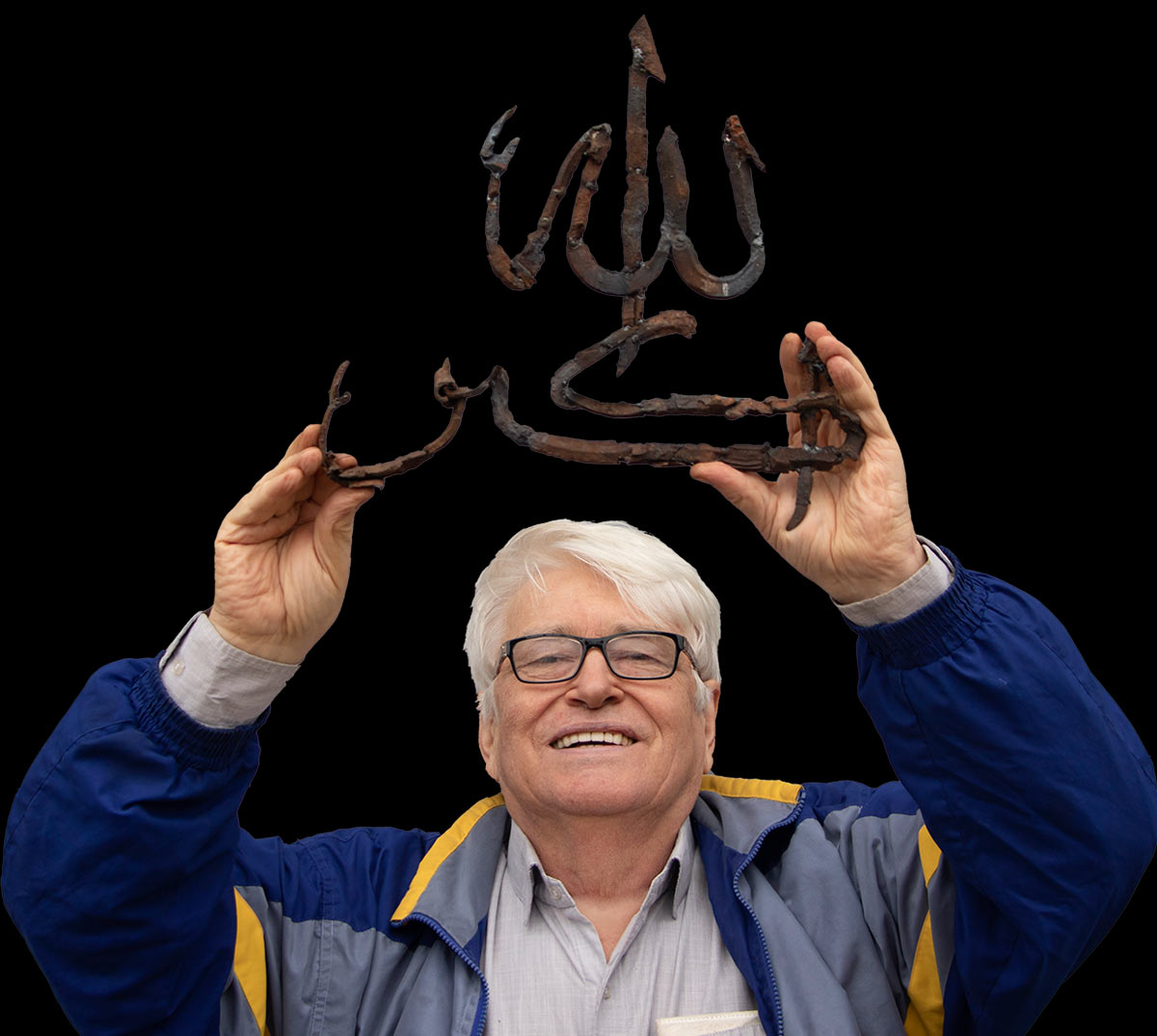
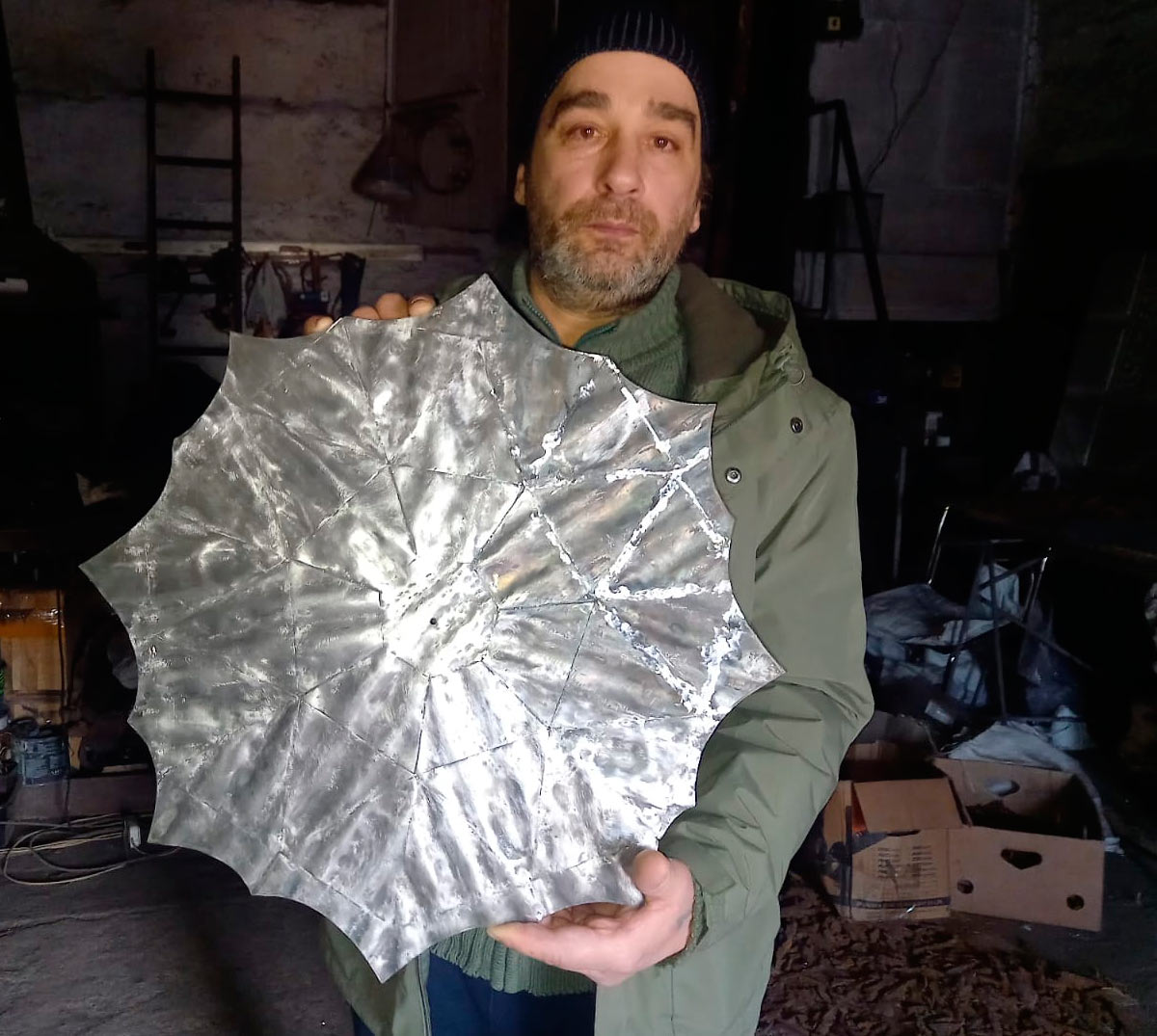
MFF presents a finished fragment of the work in progress.
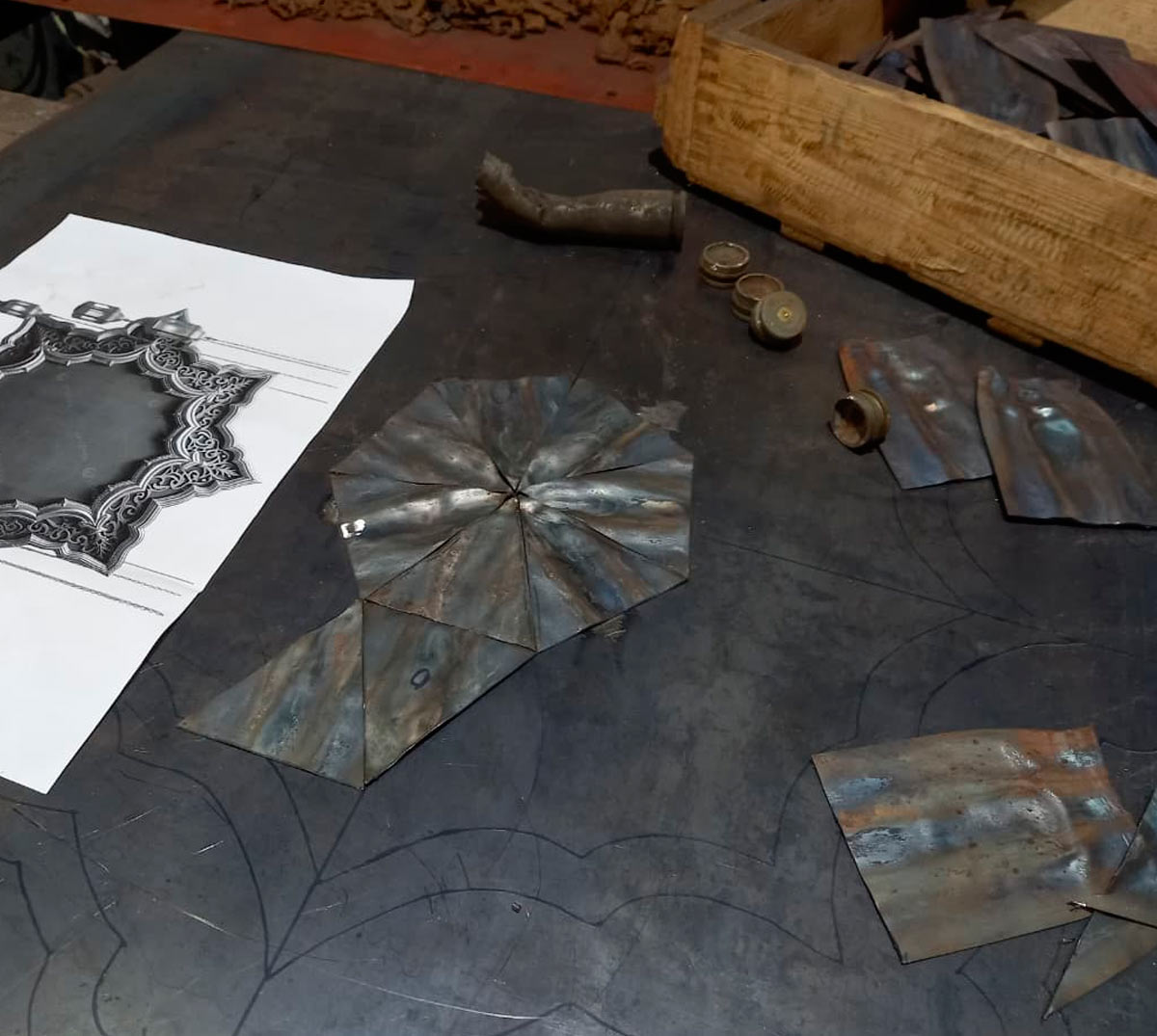
The most distinctive aspect of Ashes of War is the creation of metal ‘fabric’.
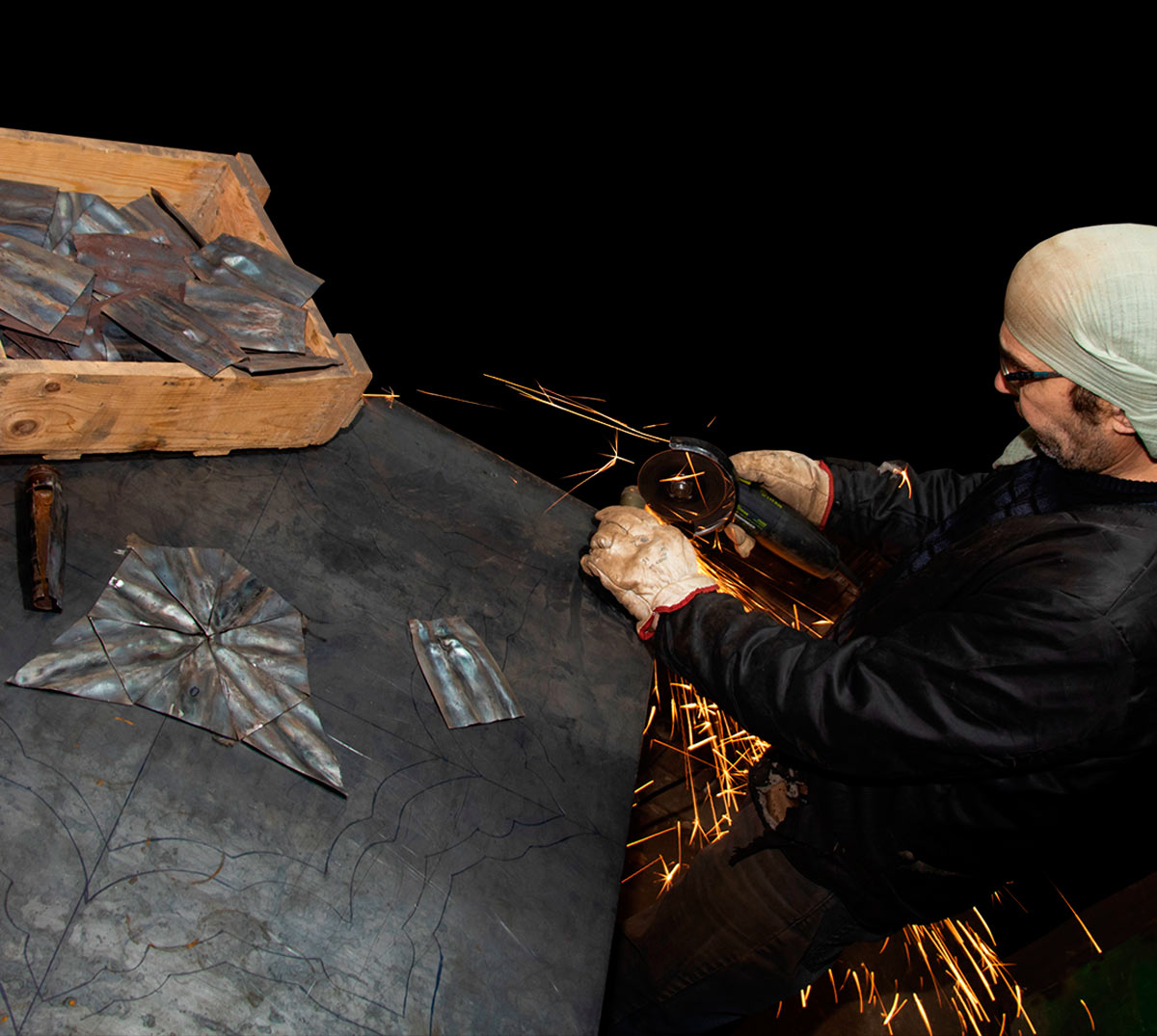
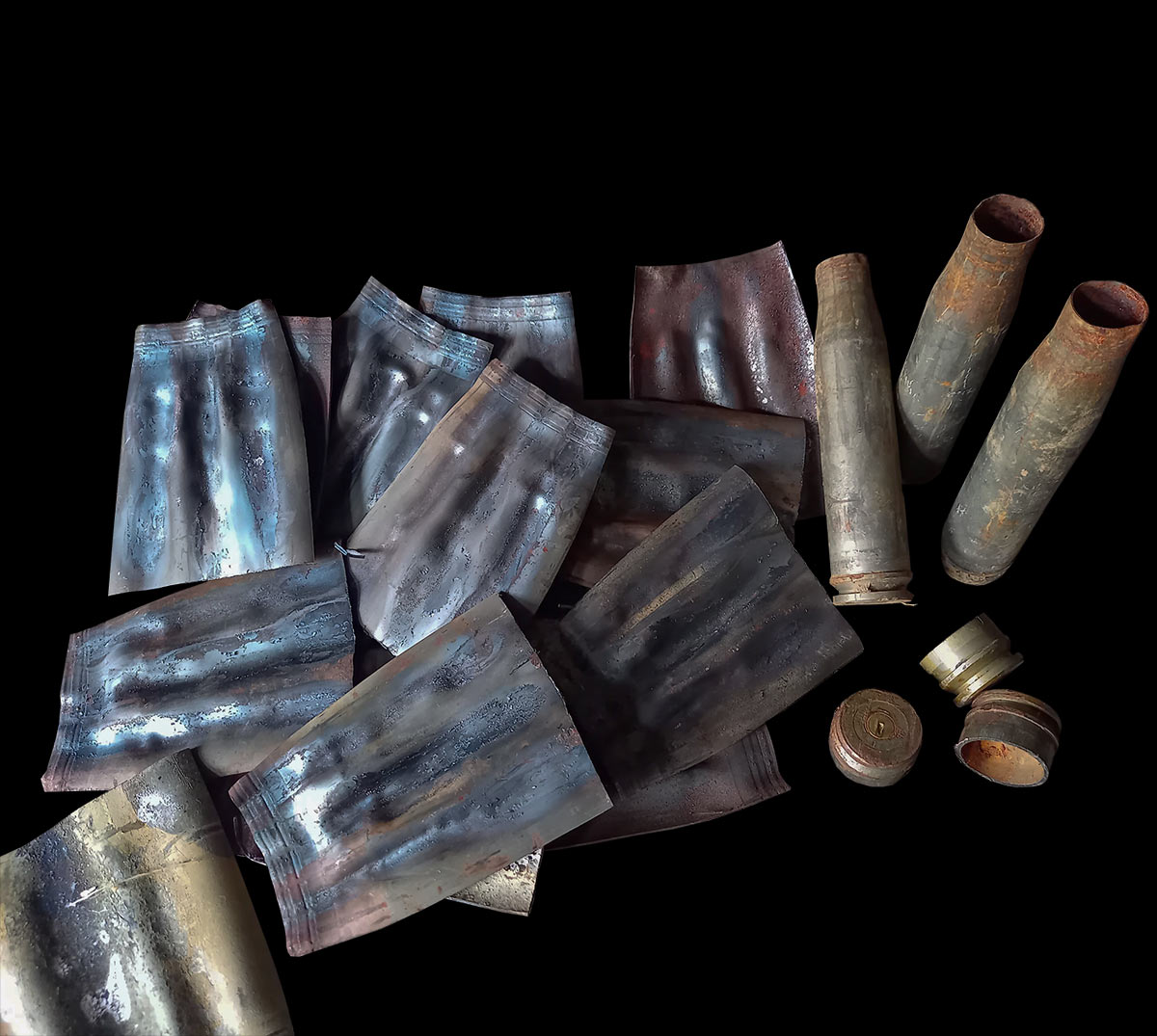
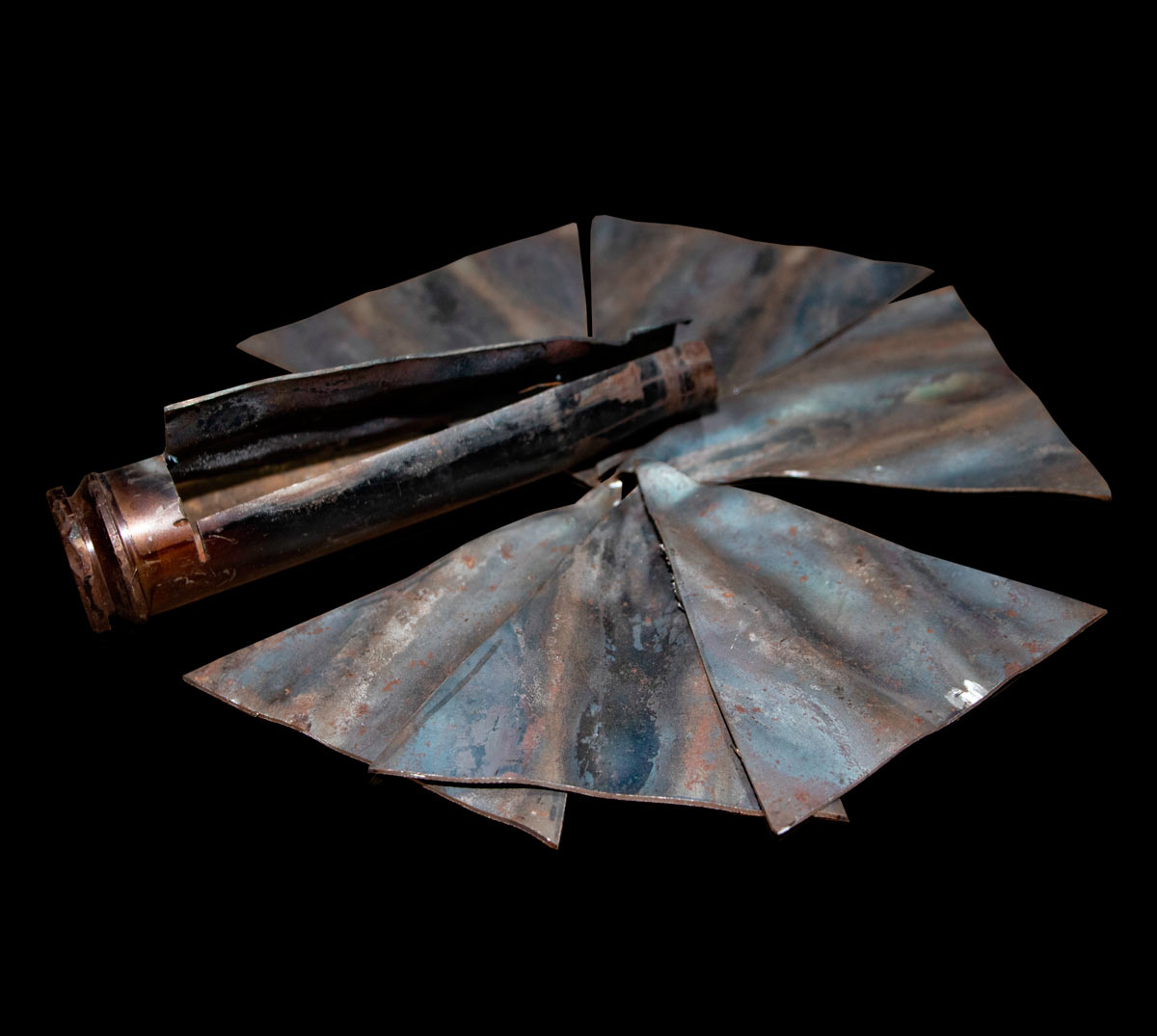
Cartridges from 30 mm and 23 mm automatic cannon are cut and forged into flat fragments.
Automatic cannon shells form the source material for creating ‘fabric’ in the Ashes of War series.
Automatic cannon shells form the source material for creating ‘fabric’ in the Ashes of War series.
The next stage involves precise marking on the welding table.
The next stage involves precise marking on the welding table.
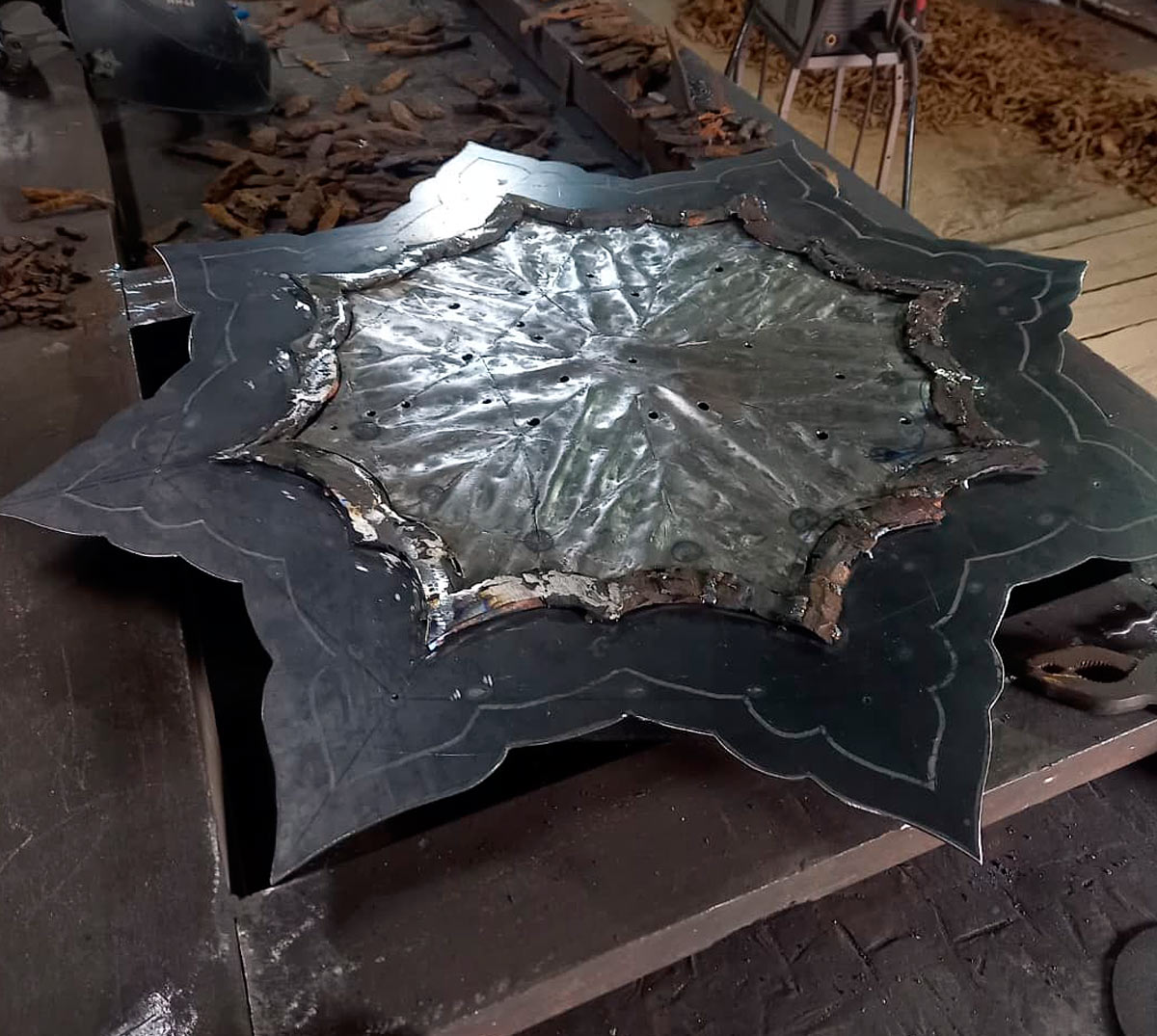
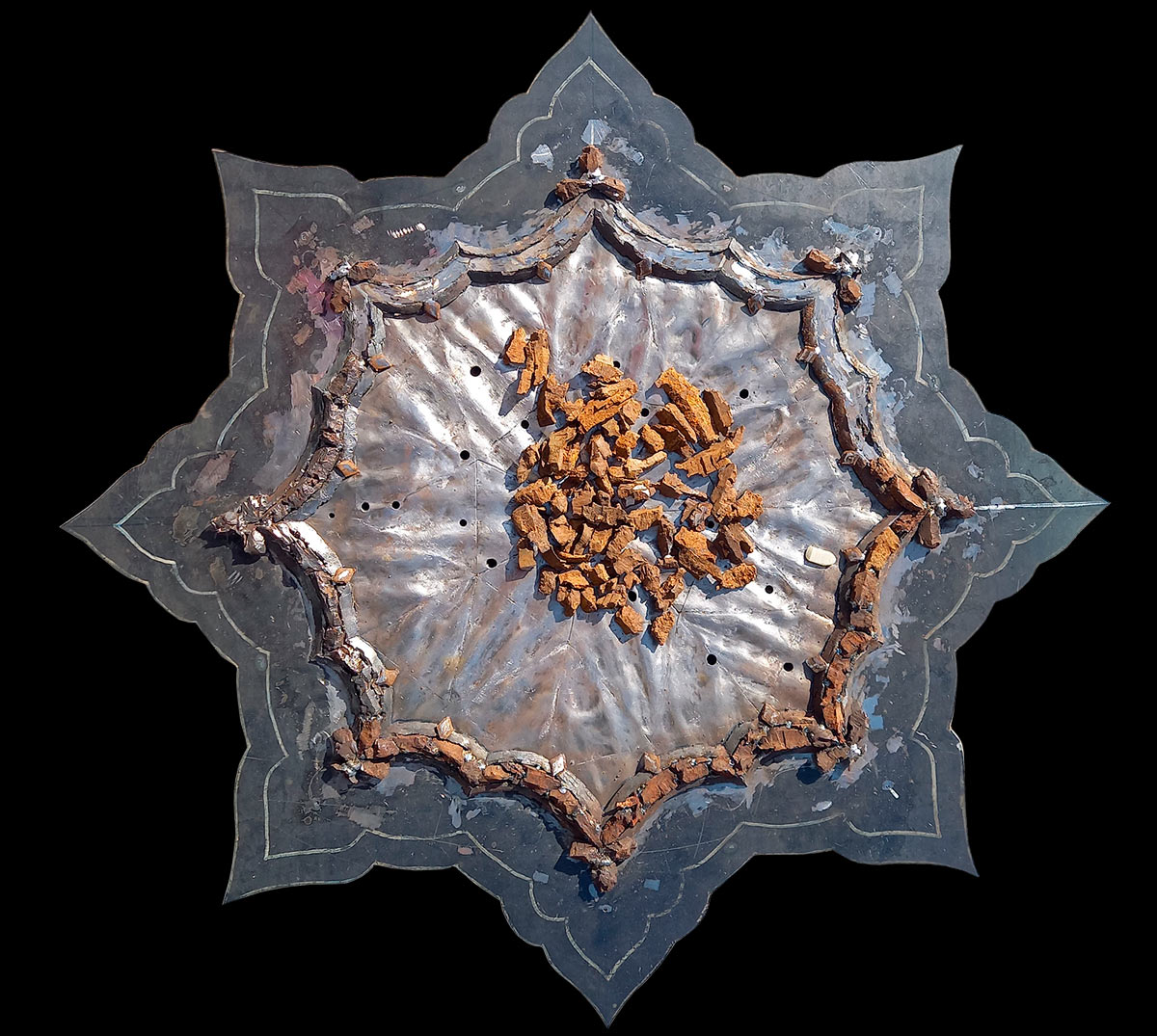
The wavy ‘fabric’ of the central section is composed of processed metal fragments.
All metal fragments are carefully joined through electric welding.
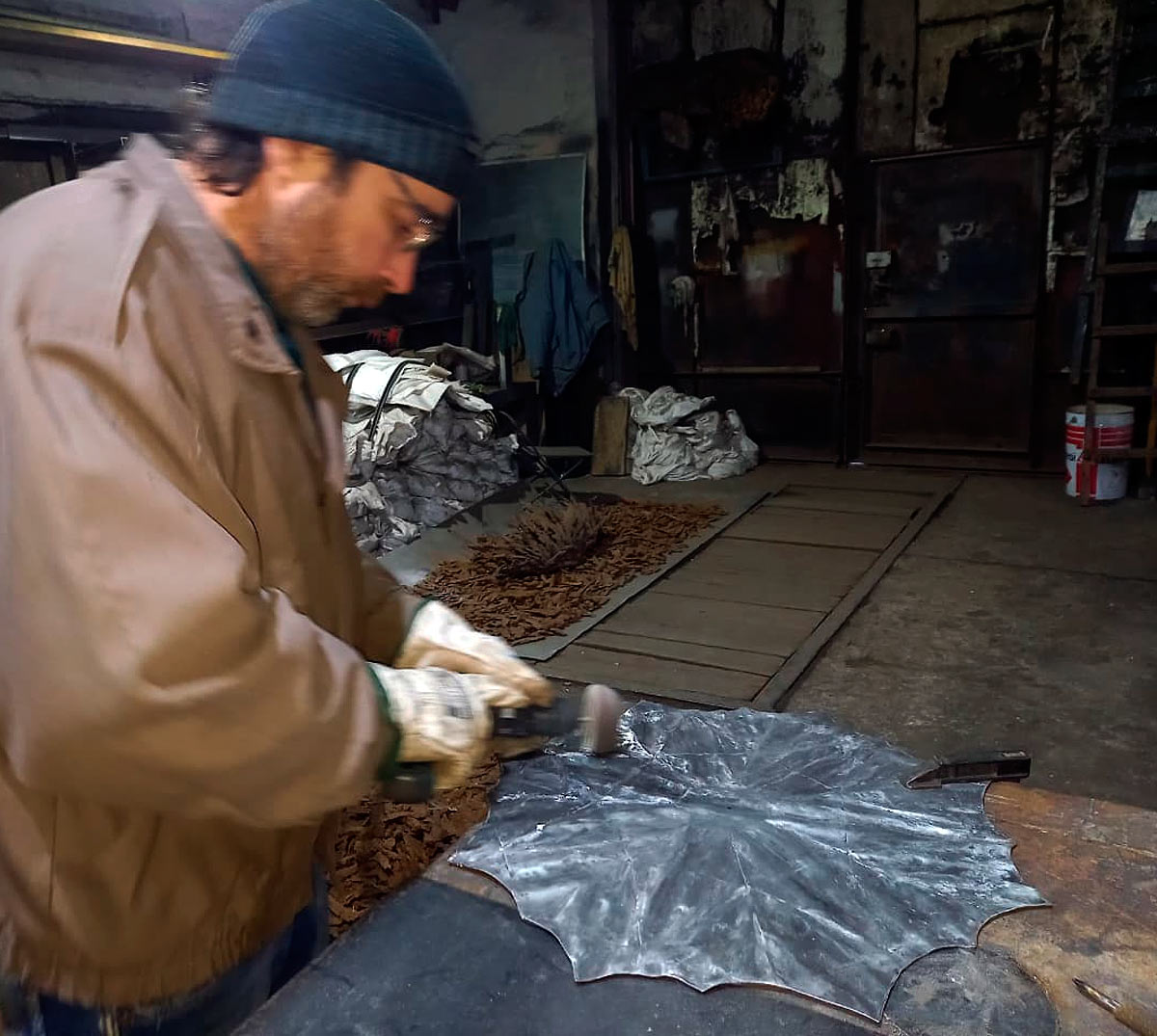
After welding, all metal is thoroughly cleaned to remove every trace of corrosion.
After welding, all metal is thoroughly cleaned to remove every trace of corrosion.
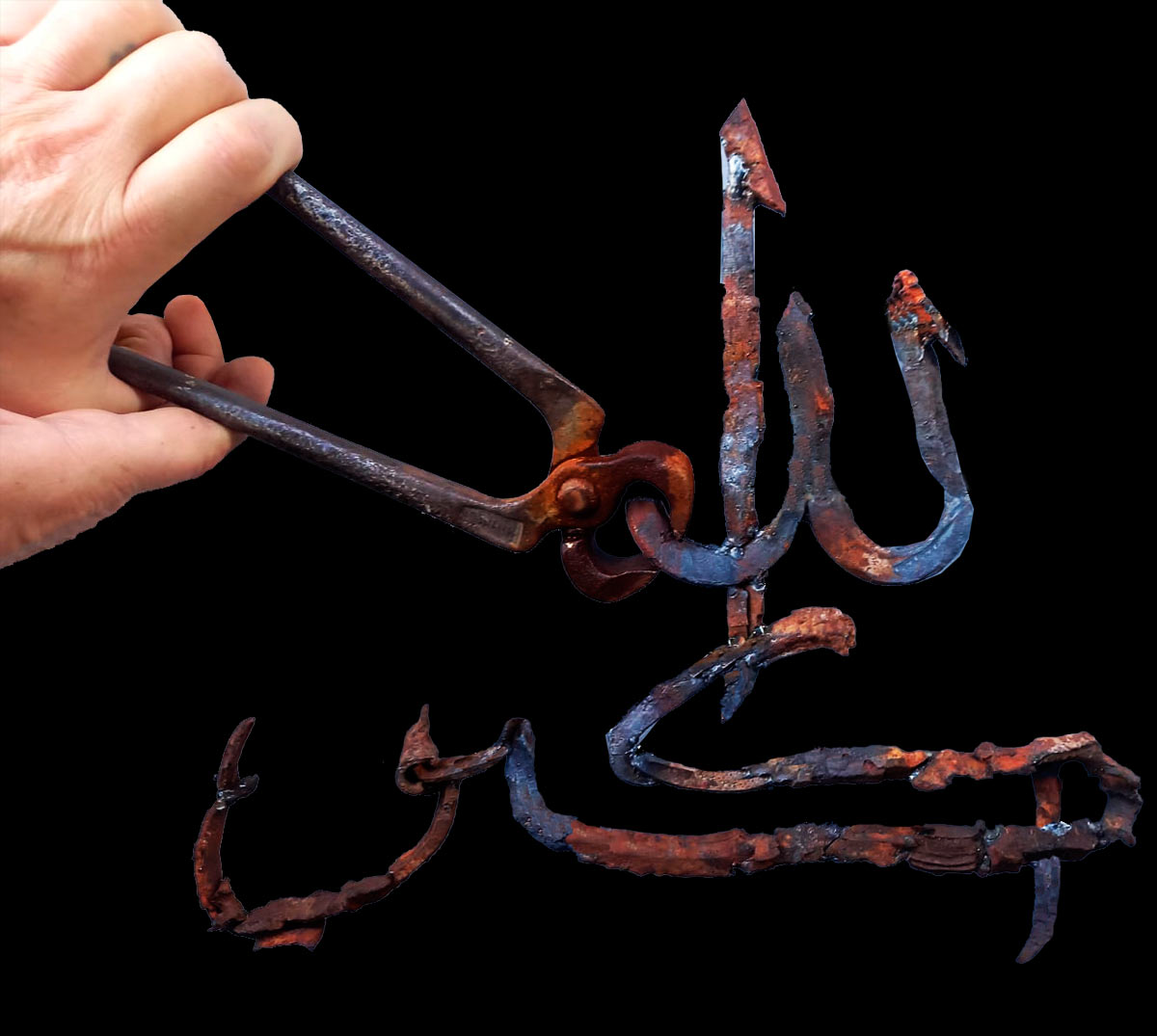
Each element of the work, including all parts of the Arabic inscription, is made removable for subsequent galvanisation.
The most complex element of Allahu Akbar is the pair of shaped frames.
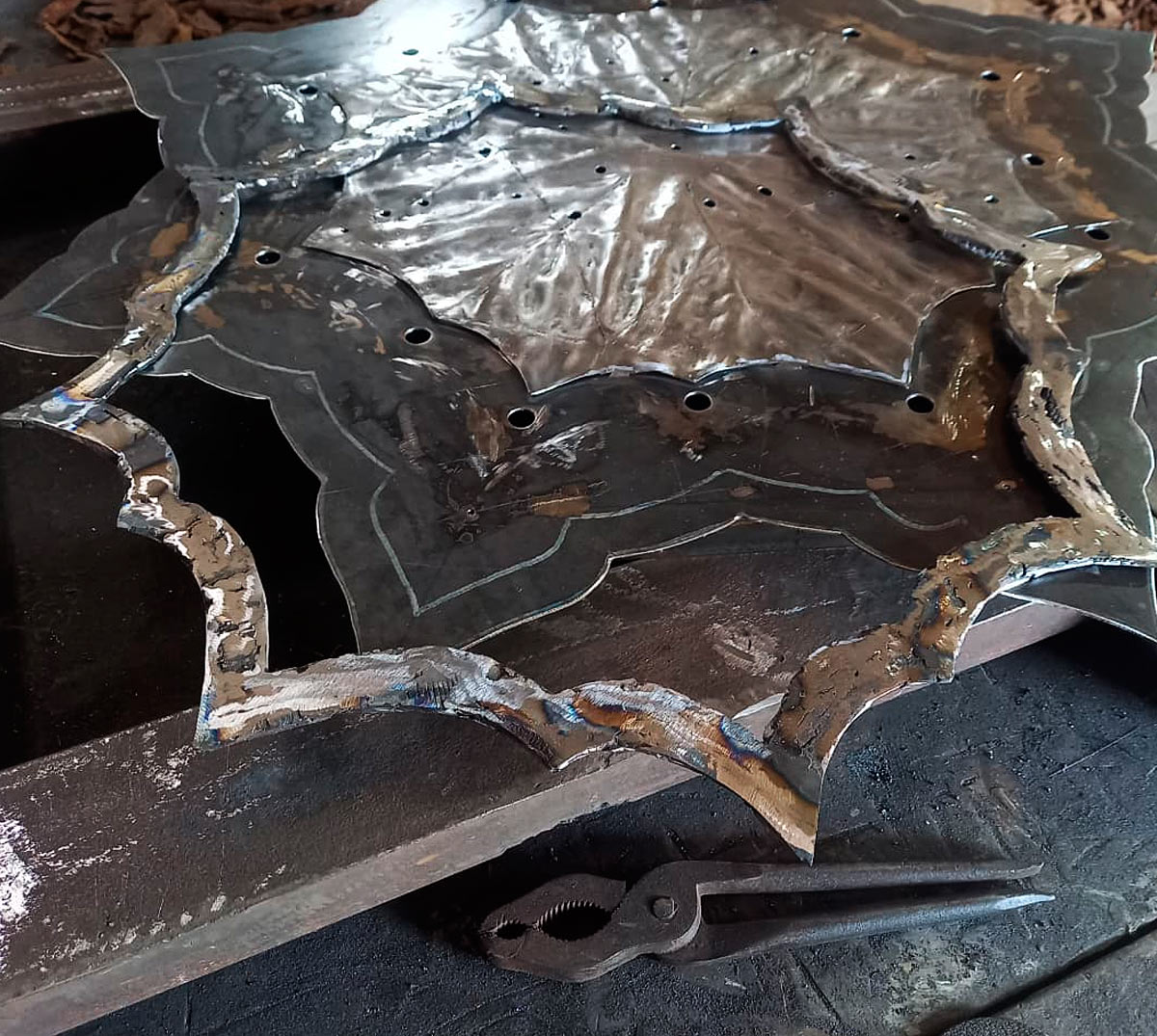
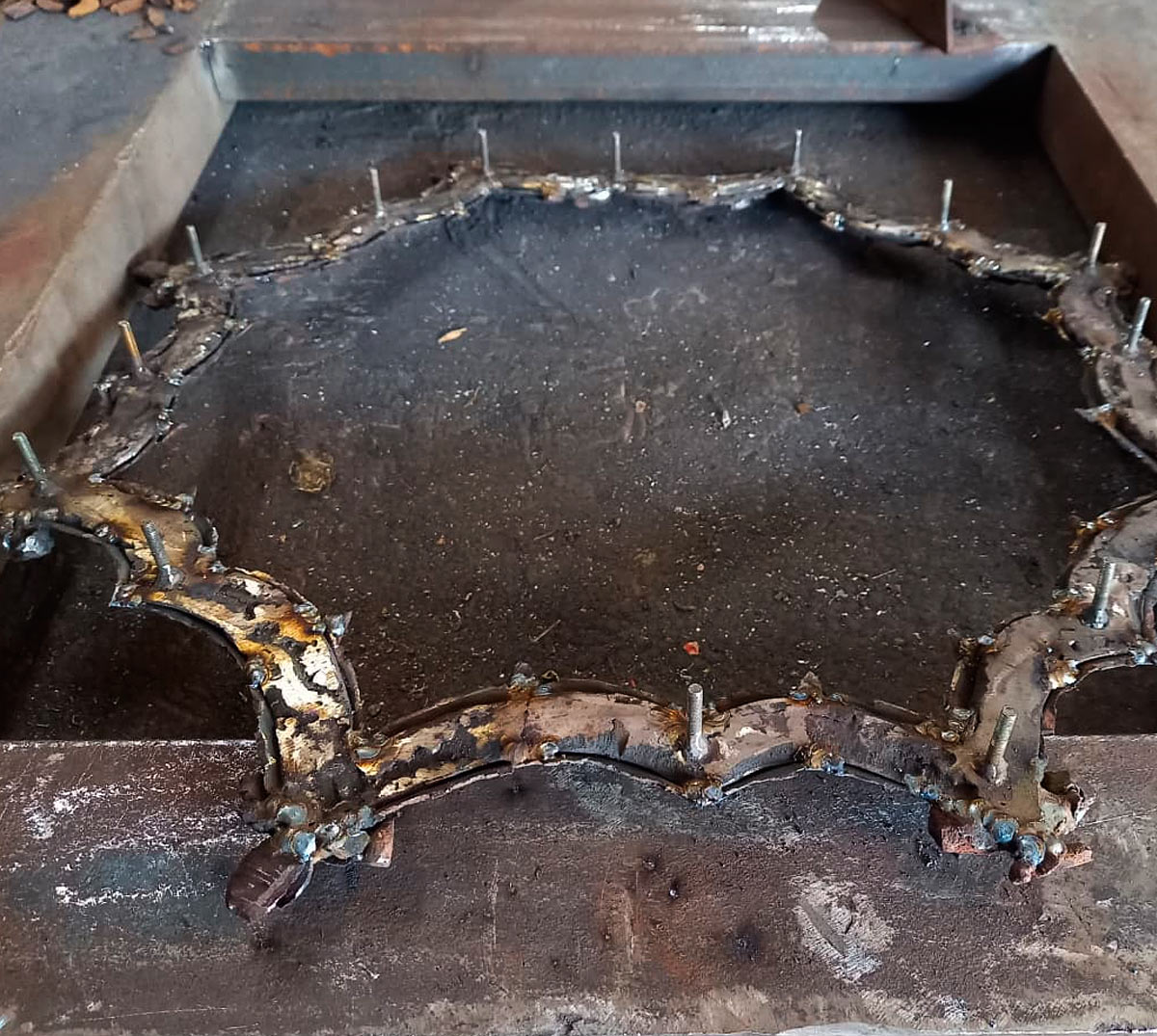
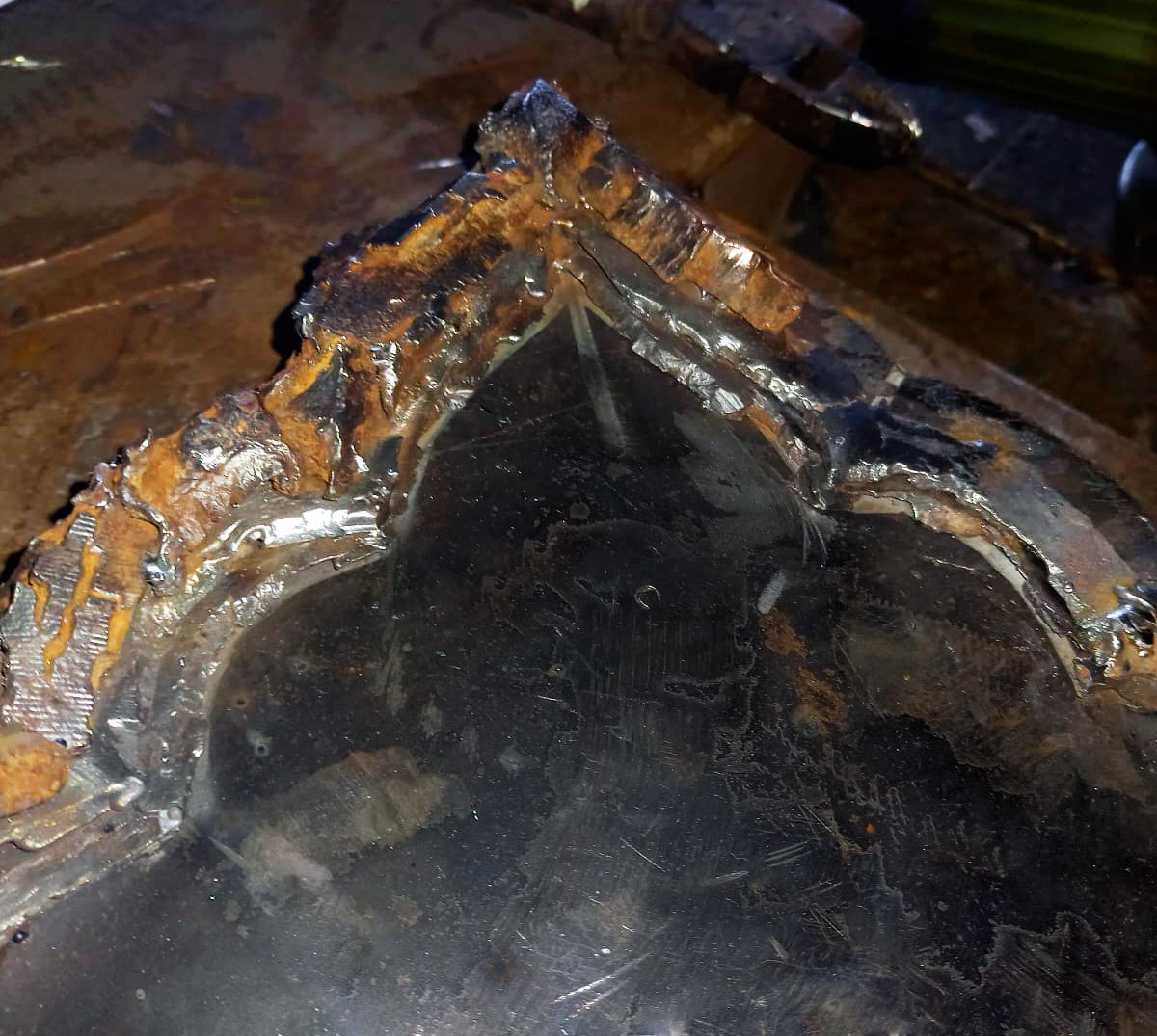
For the first layer of the frame, large curved fragments are selected, welded together, and mechanically smoothed into a single plane.
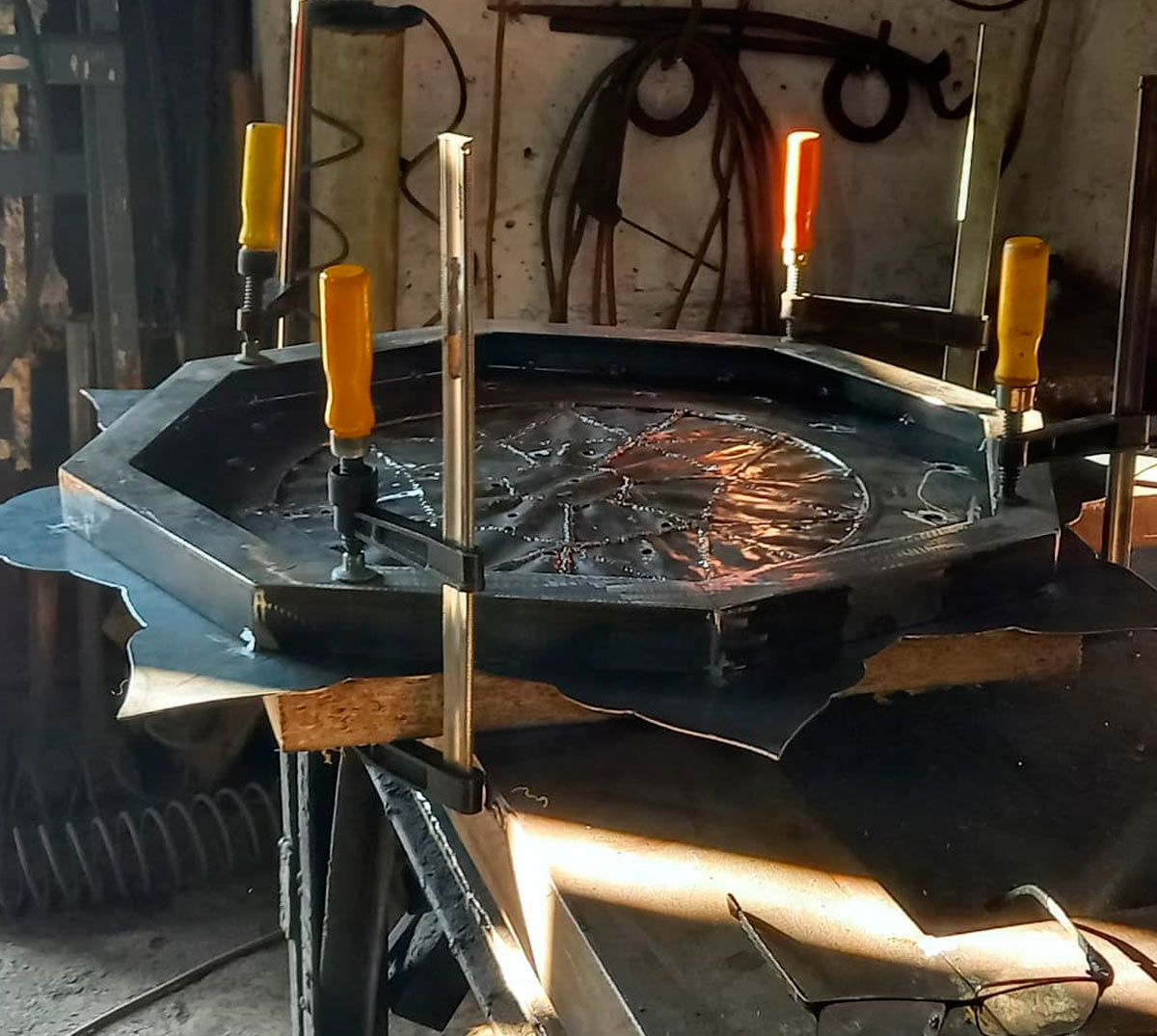
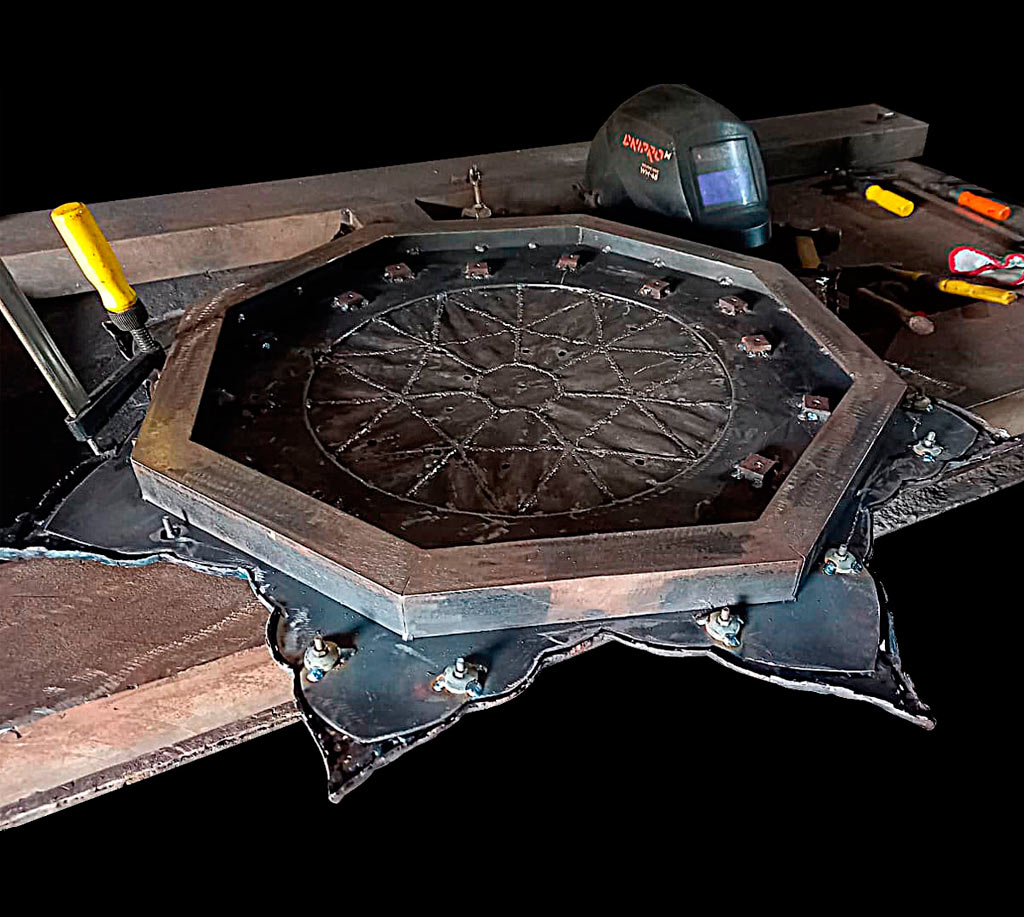
The first layer of the frame is fixed to the base with multiple bolted connections, preventing distortion as the upper decorative layers are welded on.
Small fragments are assembled into the desired form, each one carefully welded in place by hand.
Small fragments are assembled into the desired form, each one carefully welded in place by hand.
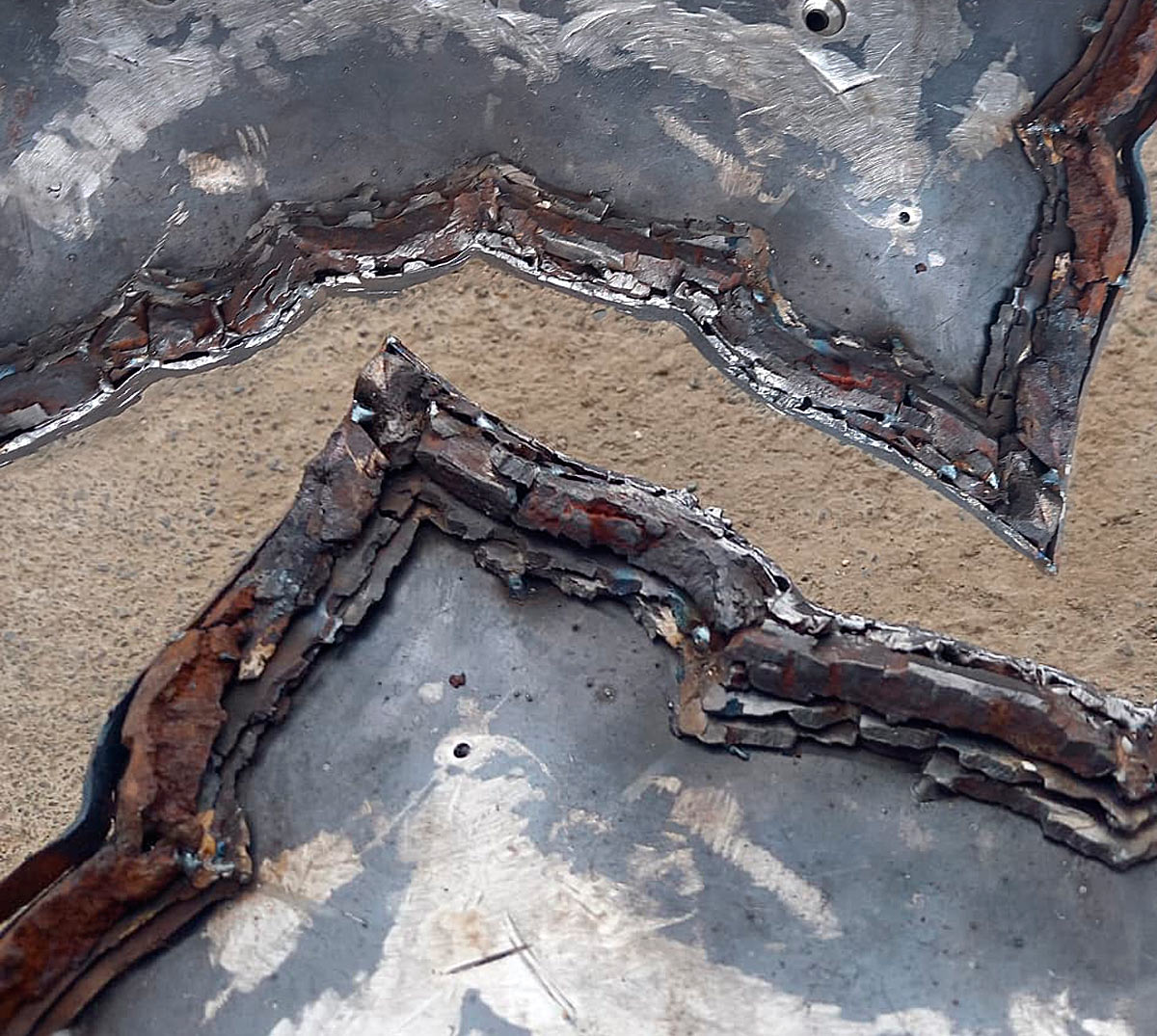
The frame’s decorative design is formed from at least five layers of fragments, built up and extended along the sides.
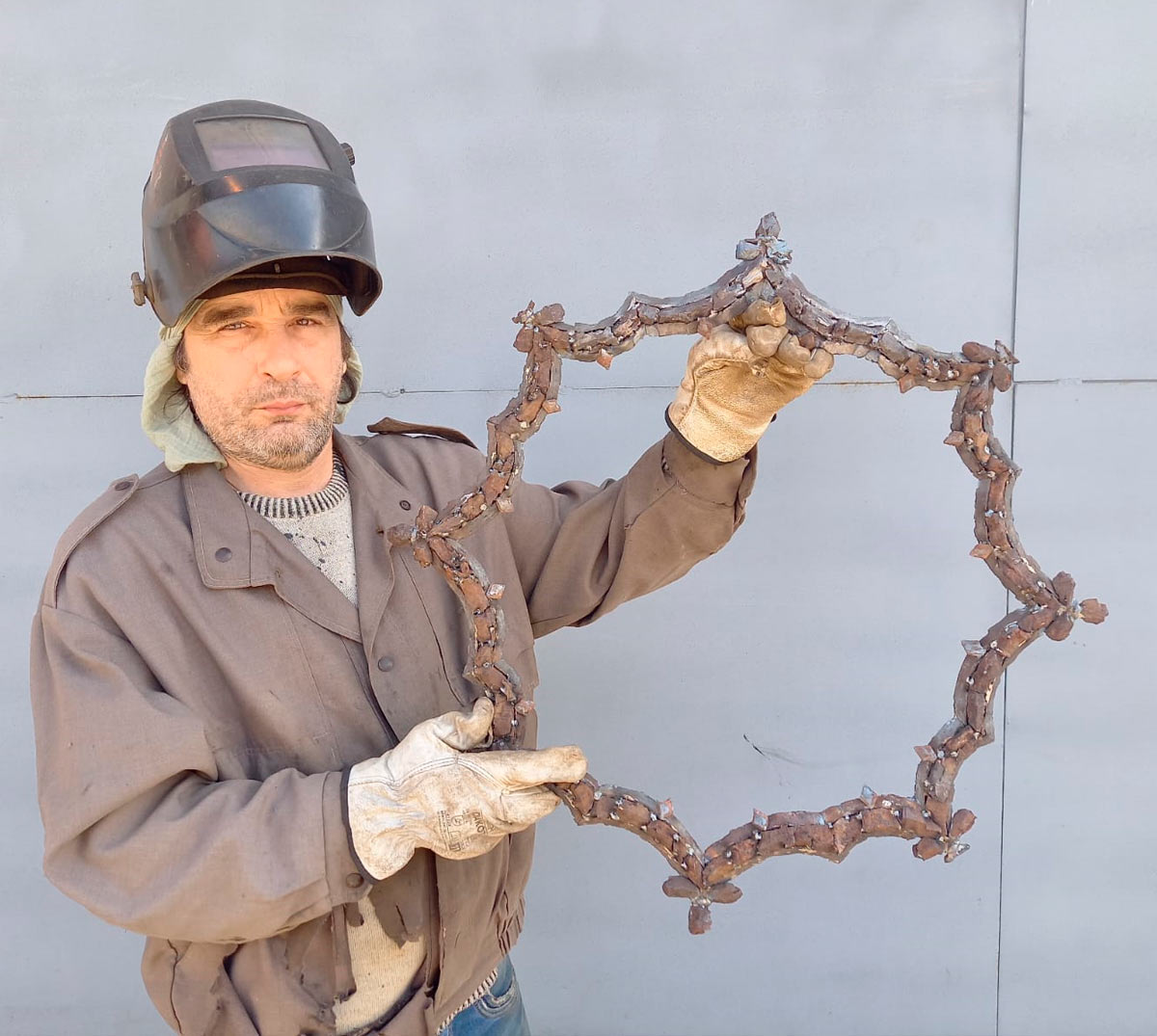
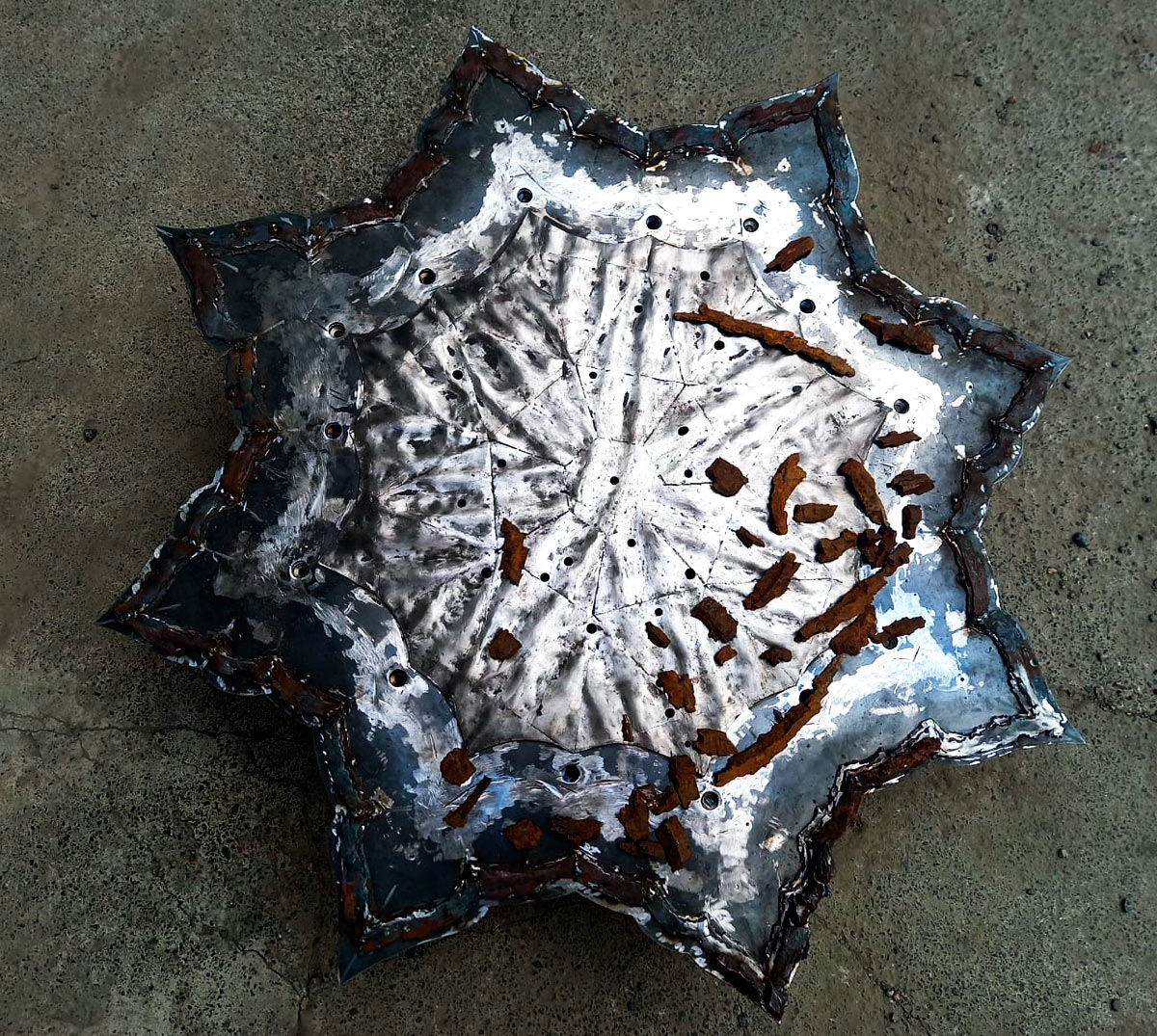
The finished frame is removed and, after mechanical cleaning, prepared for galvanisation.
Mechanical fixing of all elements is required, as they are electroplated with different metals — nickel, copper, and gold.
In Allahu Akbar, the inner and outer frames, as well as the letters of the Arabic inscription, are plated with 999.9 pure gold.
The outer frame is assembled using the same technique, built centimetre by centimetre from many hundreds of war fragments.
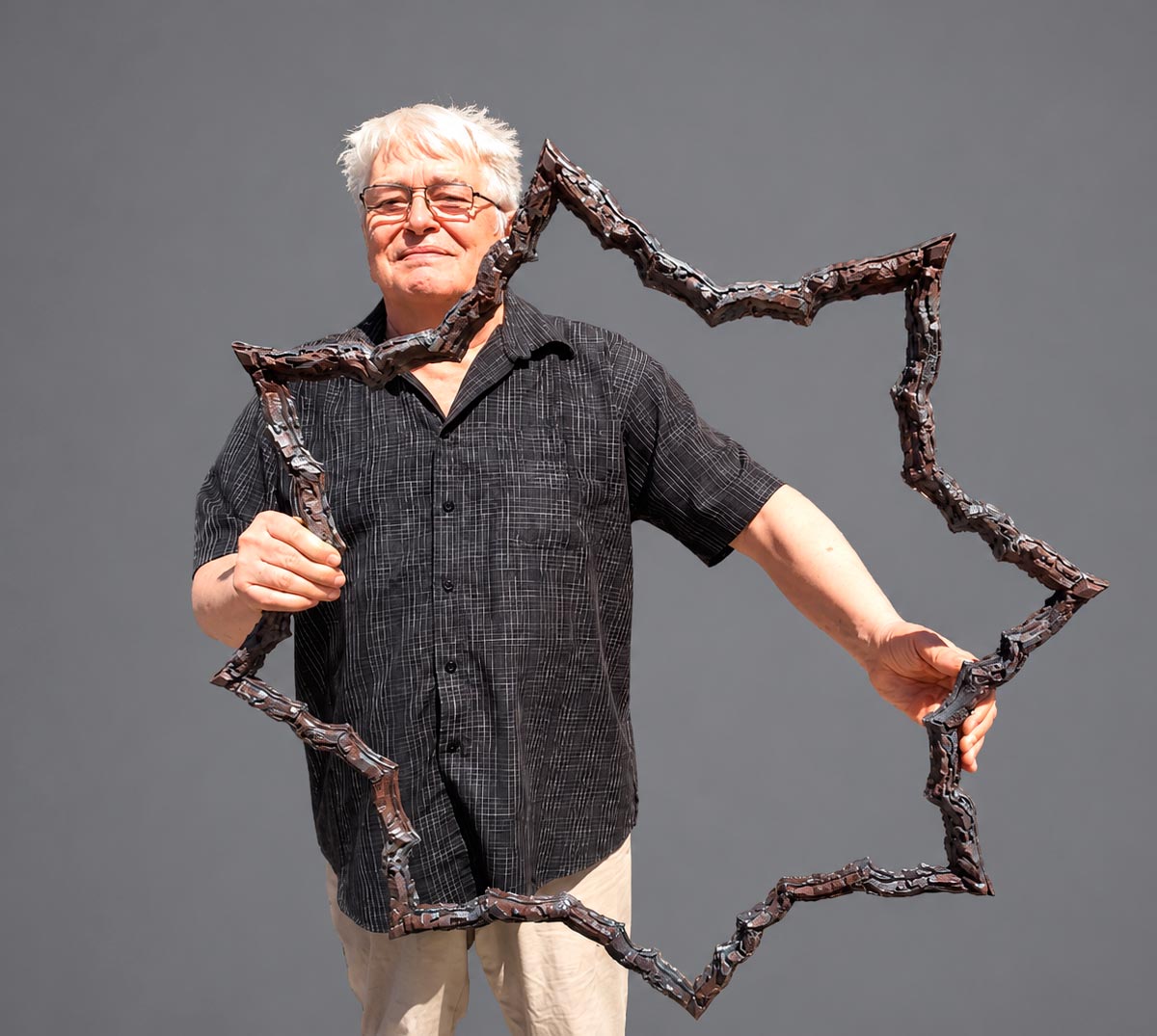
The outer frame is assembled layer by layer and will also be plated with 999.9 fine gold through electroplating.
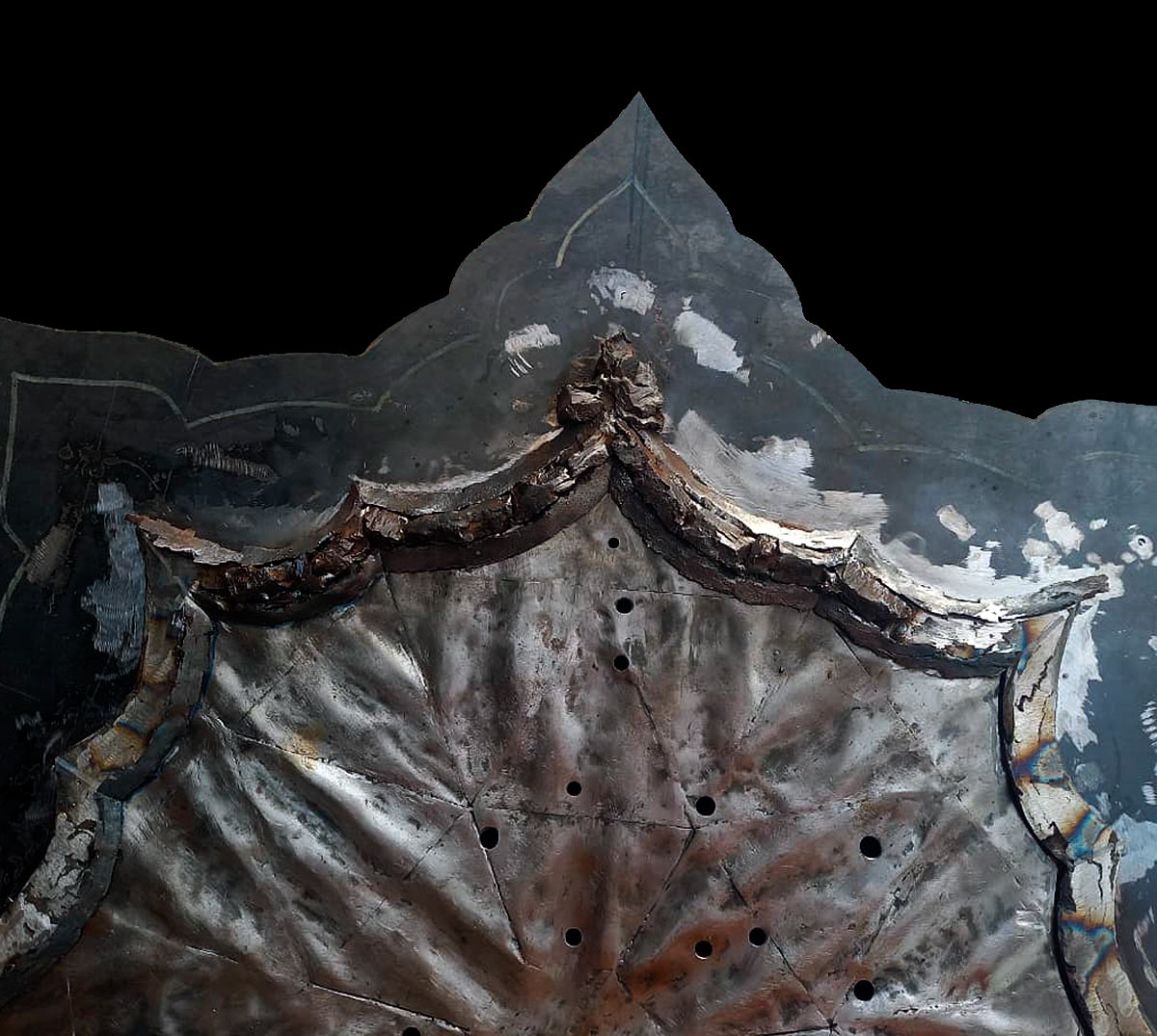
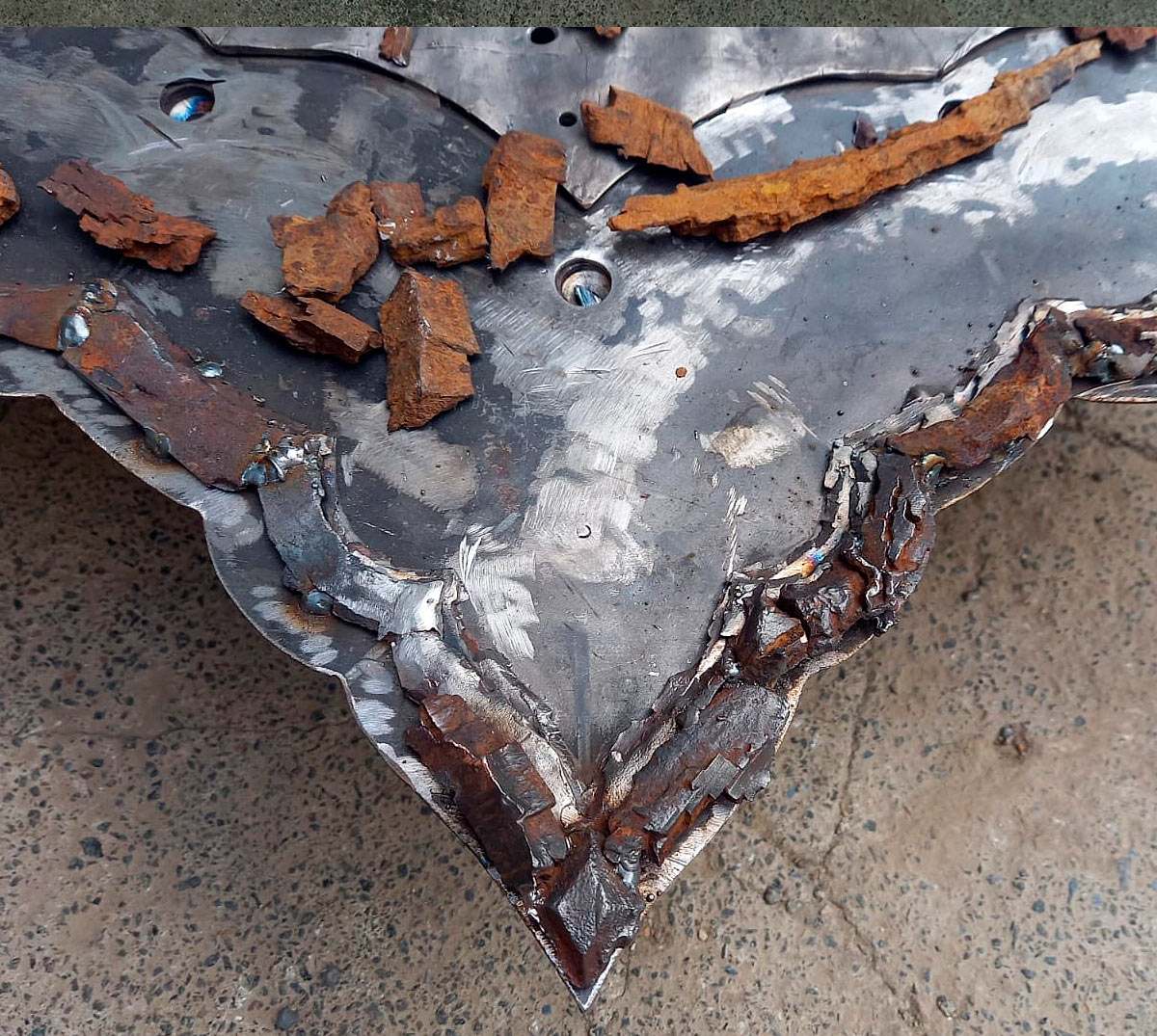
The outer points of the octagonal ‘star’ are adorned with carefully selected diamond-shaped fragments.
On the inner side, the frame is constructed in three stepped tiers, with the first two layers formed from flat fragments.
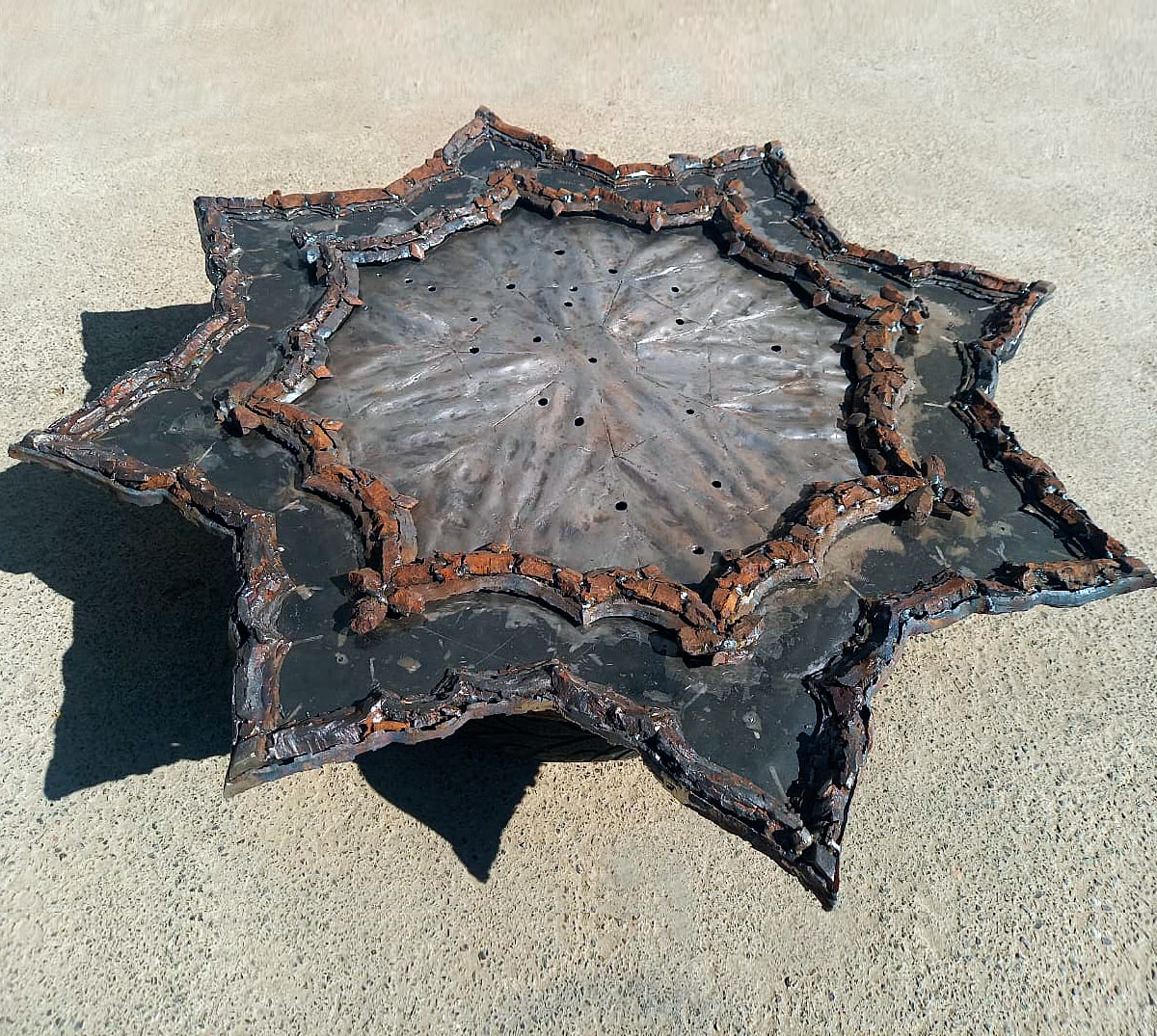
Fragments of the completed outer frame assembly — three layers built up and framed by precisely selected ribbon-shaped fragments.
A reserve of three and a half tonnes of fragments allows for the selection of pieces in virtually any required form.
Both frames are now complete. The next stage is to craft the ornament using fragments of 5.45 mm cartridges.
MFF presents the completed outer frame, assembled from war fragments, for the composition Allahu Akbar.
The reverse side of the Allahu Akbar composition, with its elements mechanically secured in place.
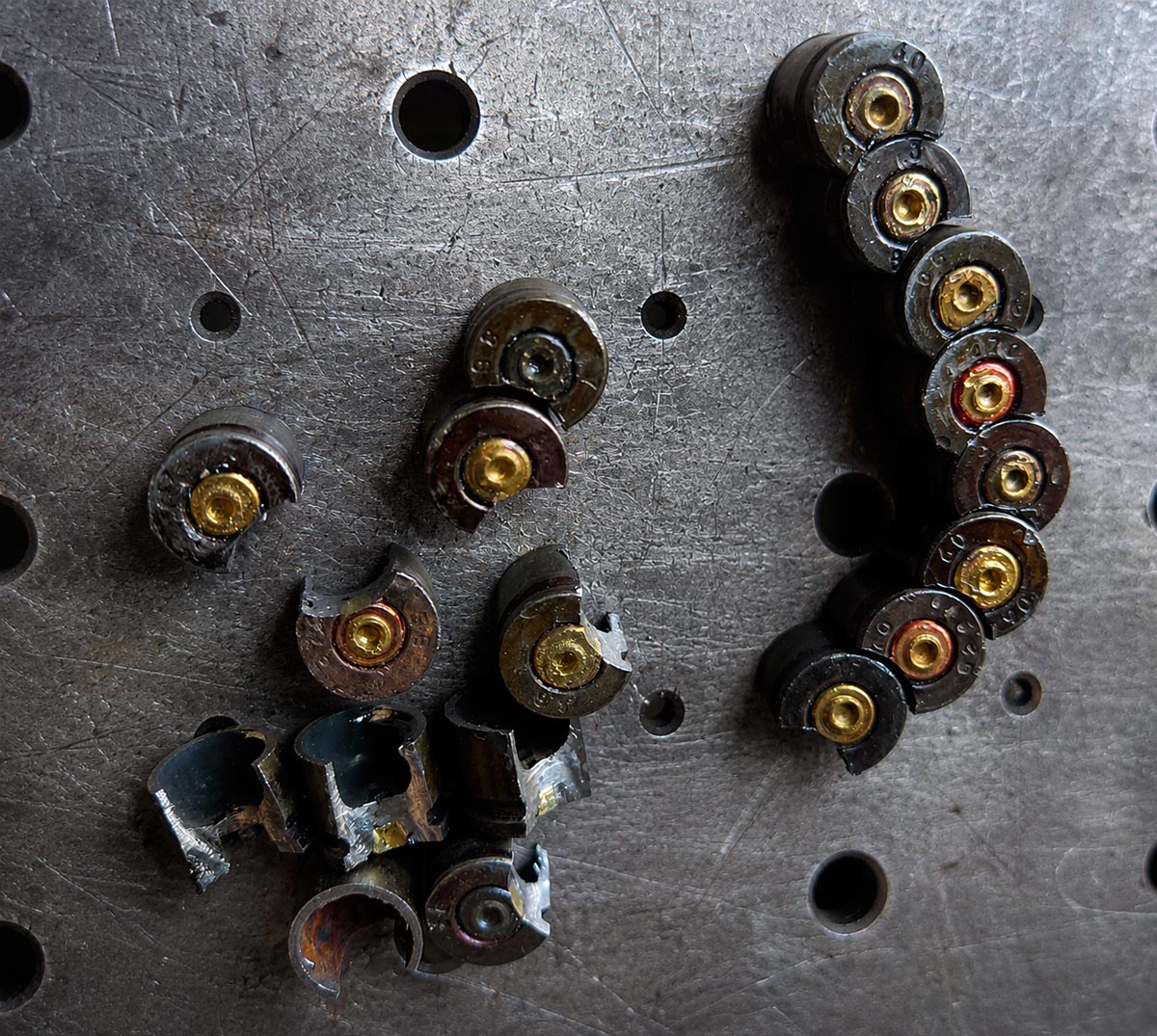
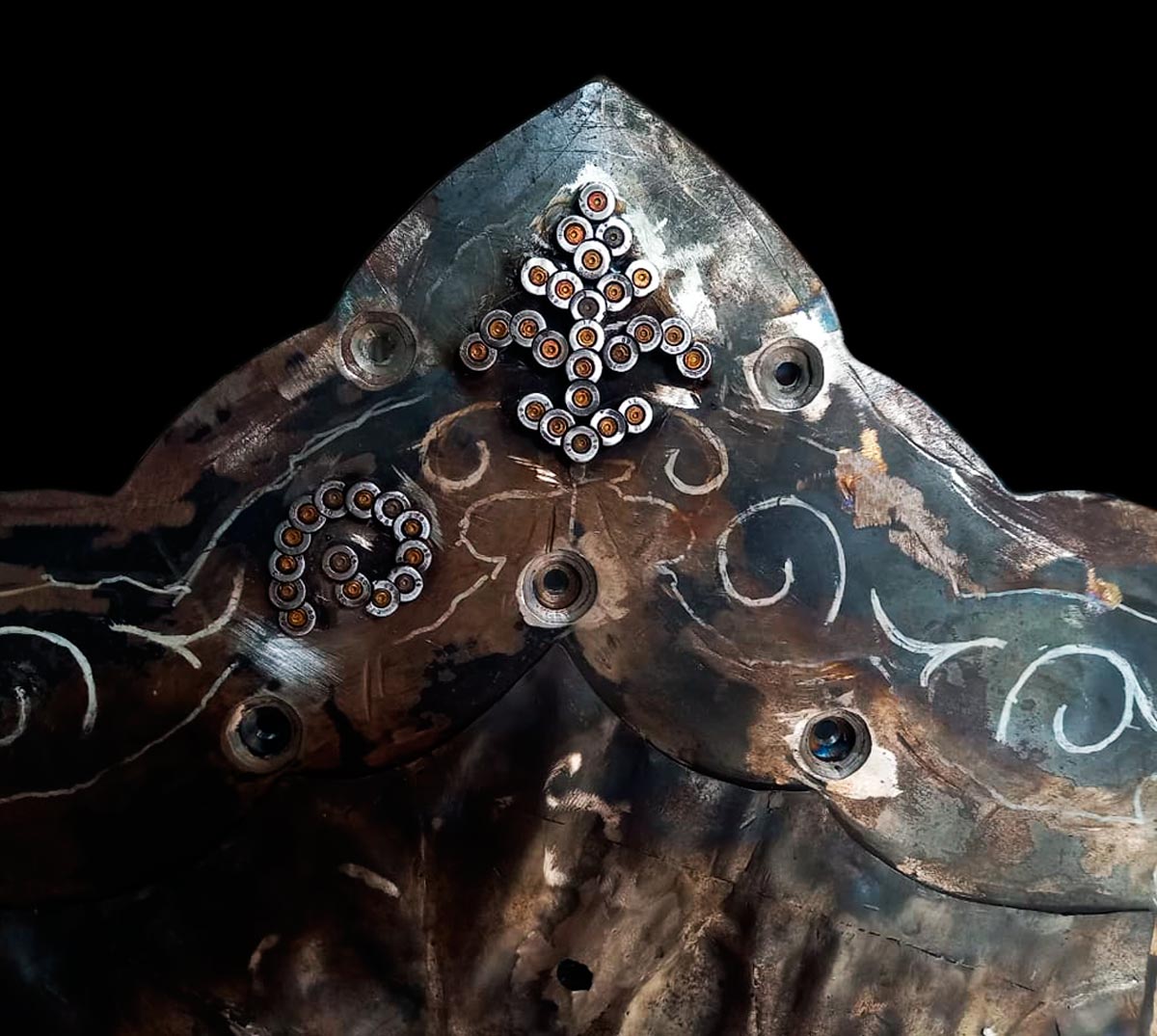
The decorative elements between the two frames are formed from fragments of 5.45 mm calibre cartridges.
Decorative elements between the two frames, formed from fragments of 5.45 mm calibre cartridges — more than 700 are required.
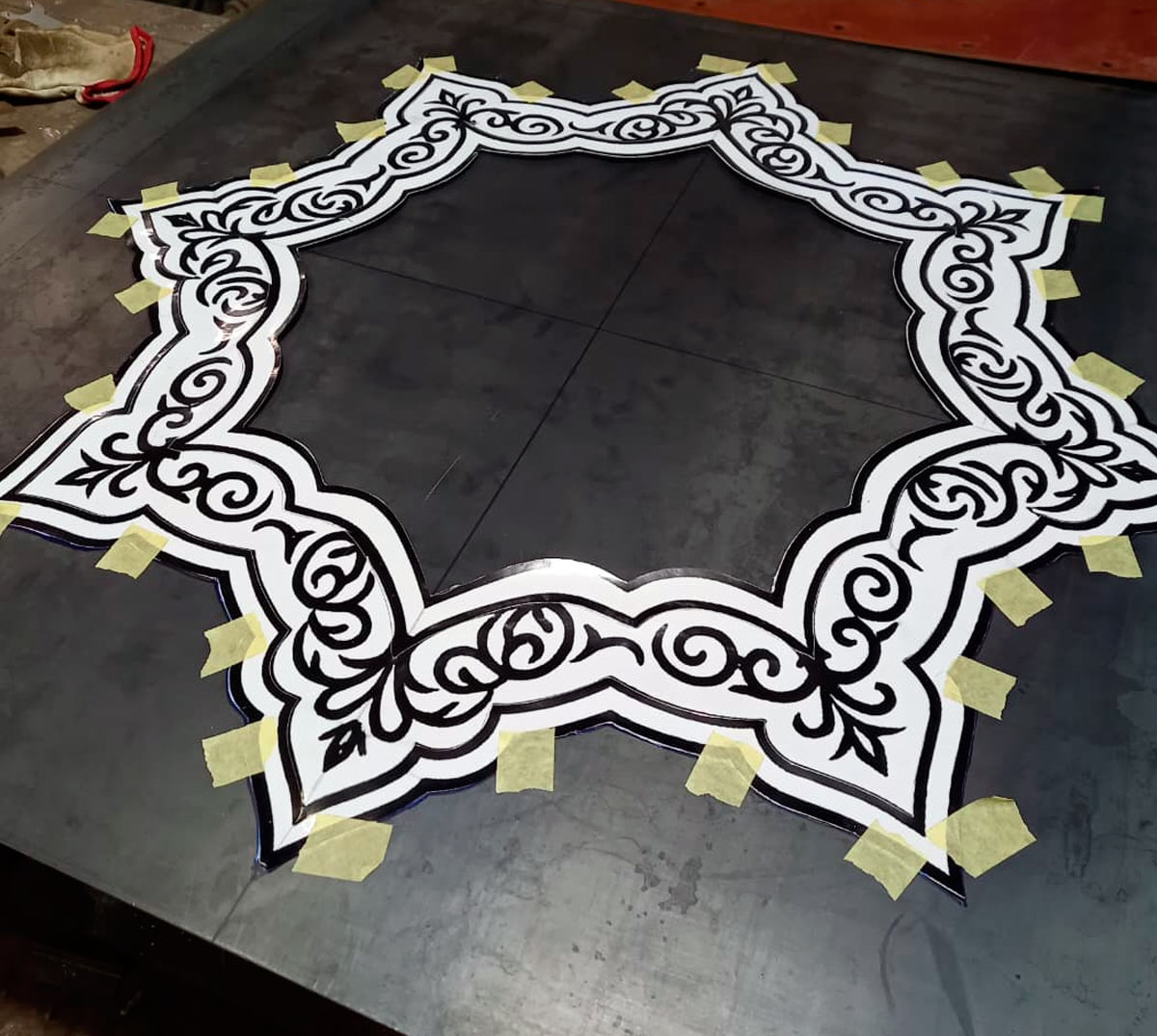
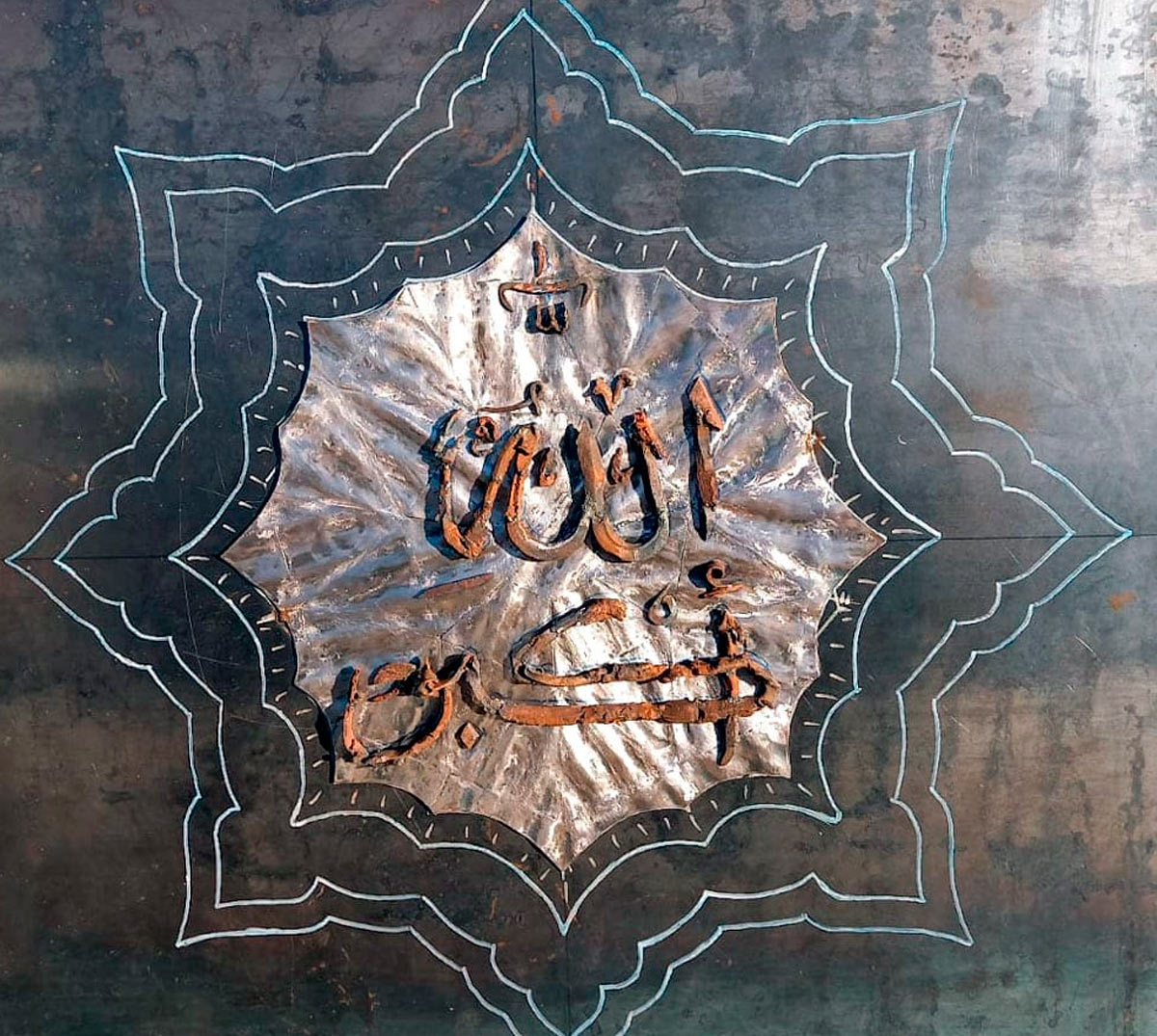
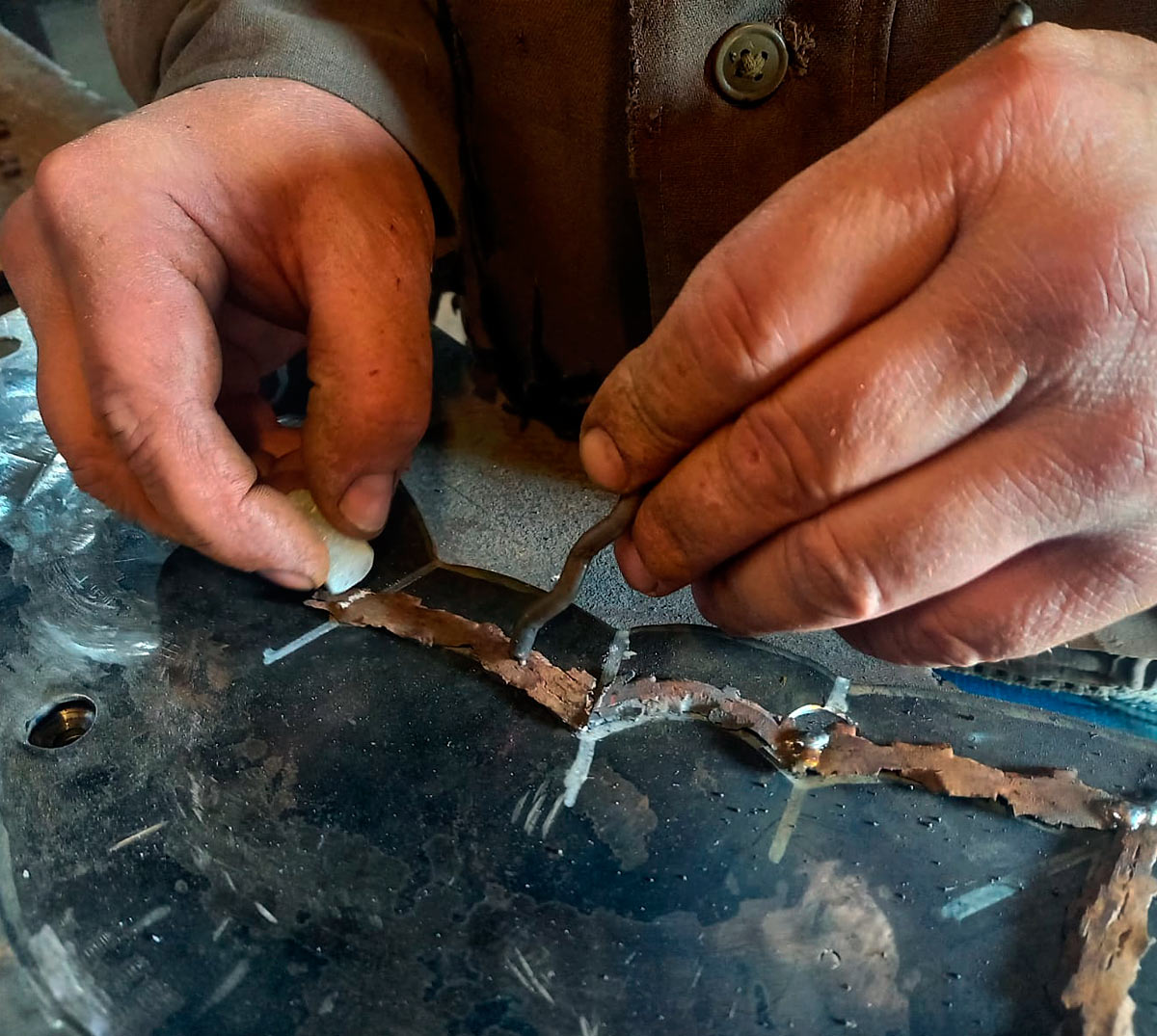
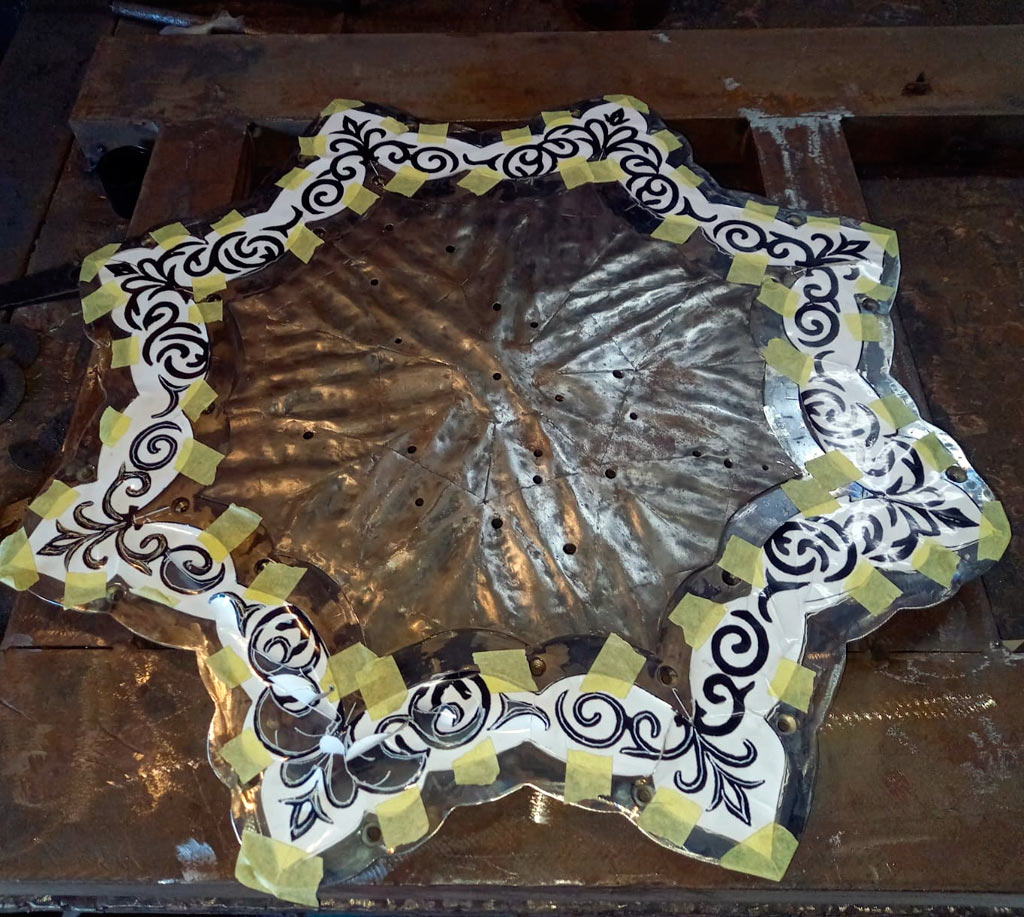
The lines of the future pattern are applied using a stencil; fragments of automatic-rifle cartridge cases will be welded along them.
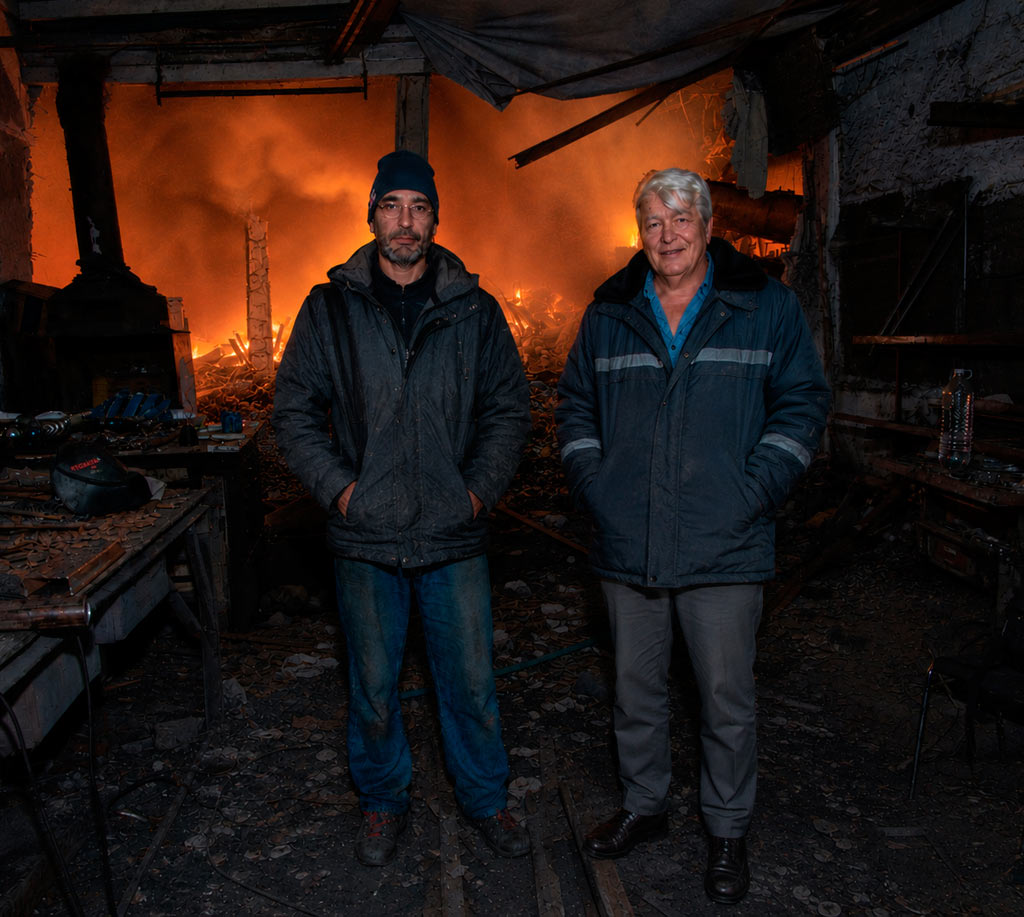
During the Christmas period of 2025, the workshop was struck by a Russian Shahed drone, causing a delay of more than two months in the work.
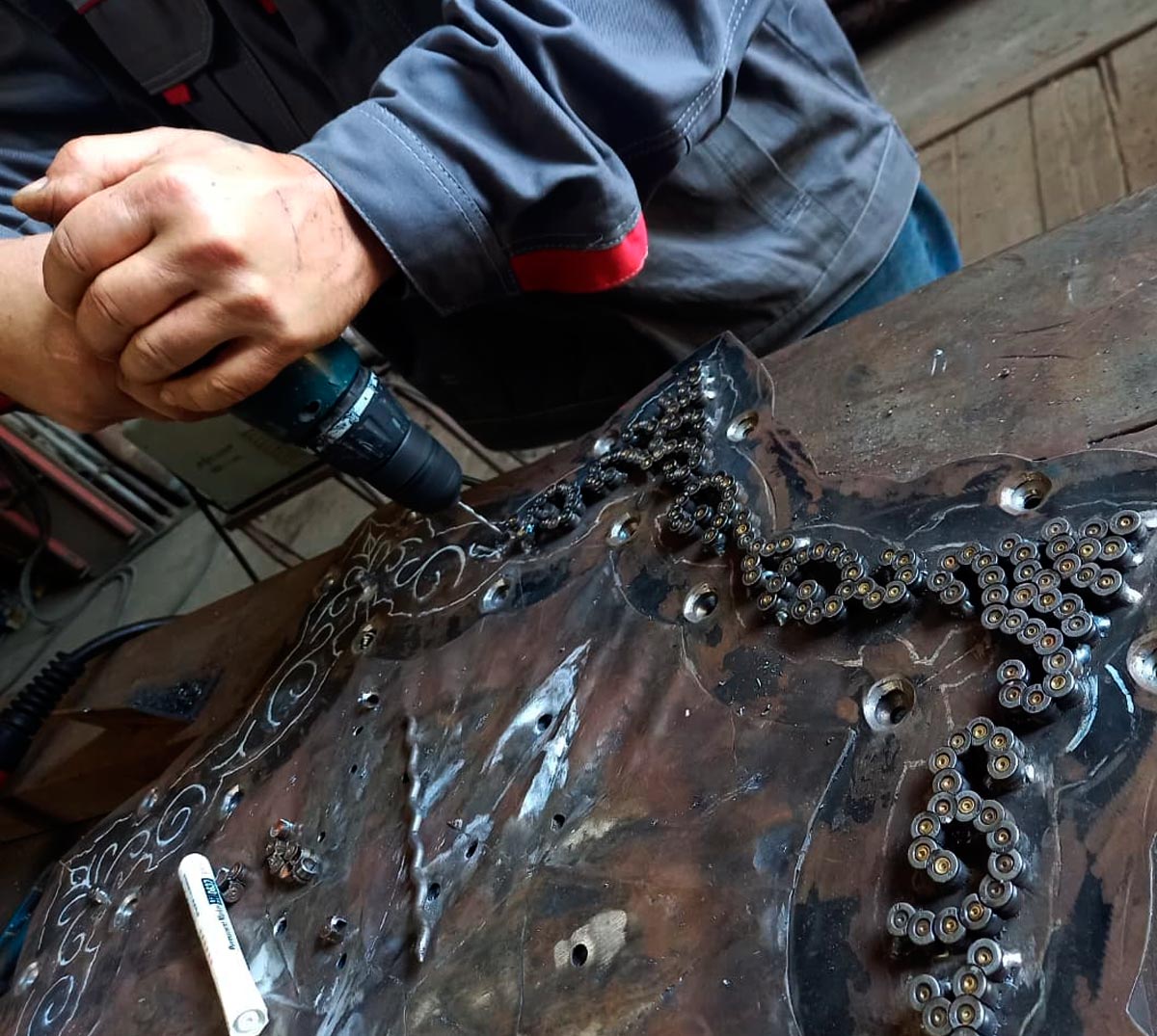
An intricate ornamental pattern will be created along the outlined lines using fragments of 5.45-calibre cartridge casings.
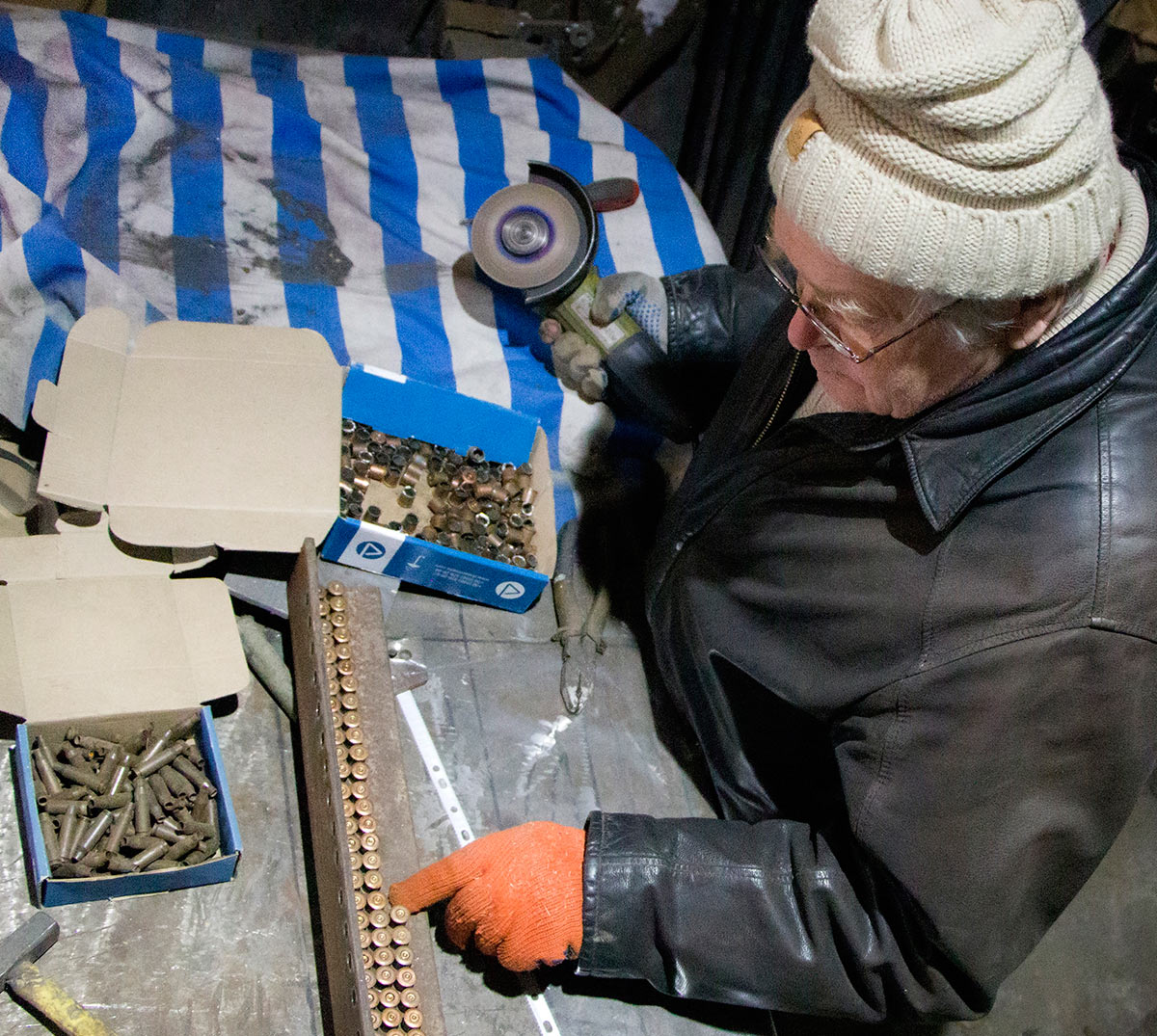
Each cartridge casing undergoes precision turning and milling in order to achieve a dense arrangement within the intricate ornamentation of the sculptural composition.
Fragments of cartridge casings are welded together one by one, carefully following the pattern sketched in white marker on the metal surface.
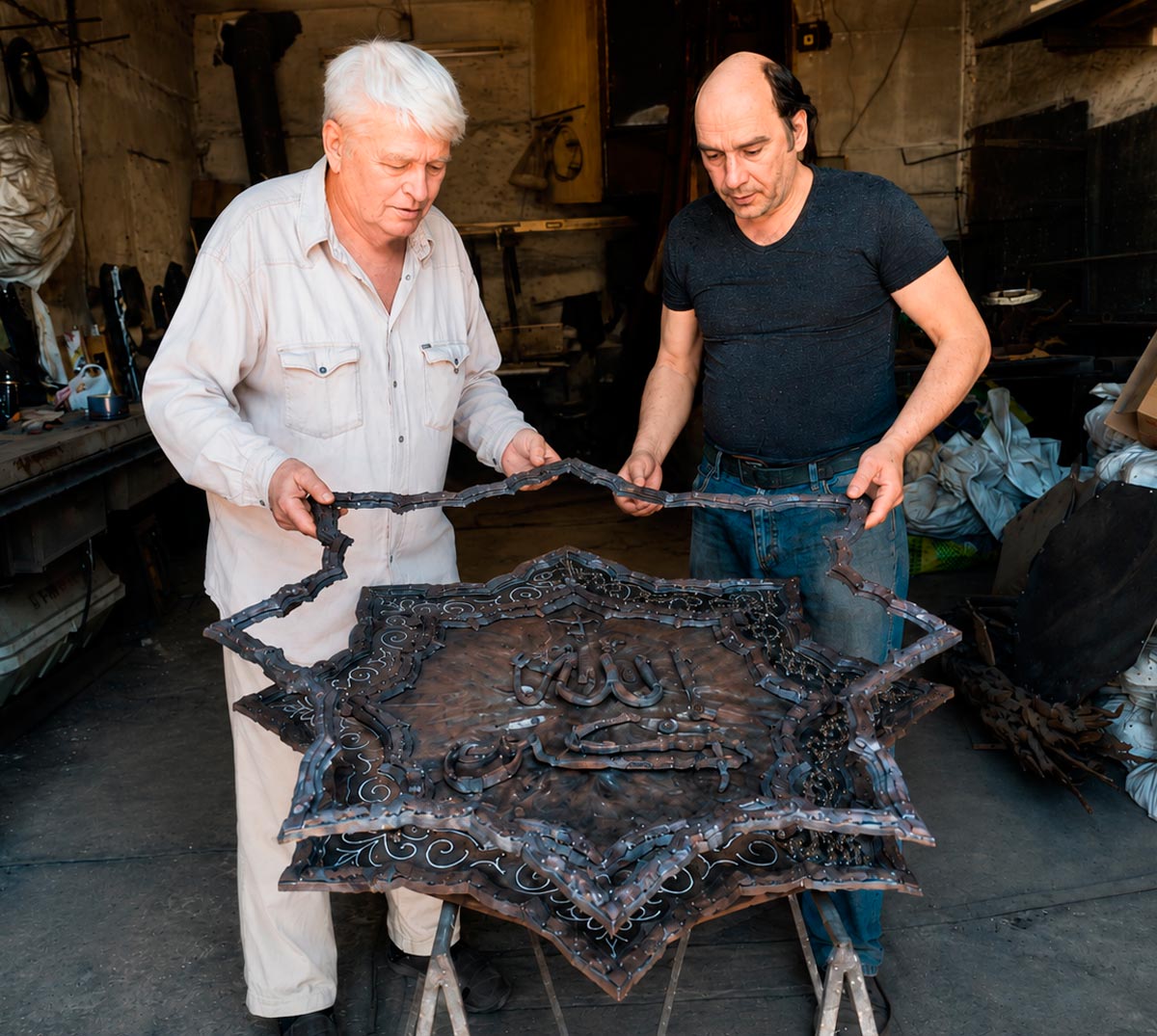
Viktor Bielchyk, lead metal specialist of the Ashes of War project, considers how to unite nearly a thousand miniature elements into a single ornamental composition.
Master assembles part of the decorative border of the sculptural composition Allahu Akbar.
Sergey Melnikoff (MFF) and Viktor Bielchyk assemble components of the artwork Allahu Akbar.
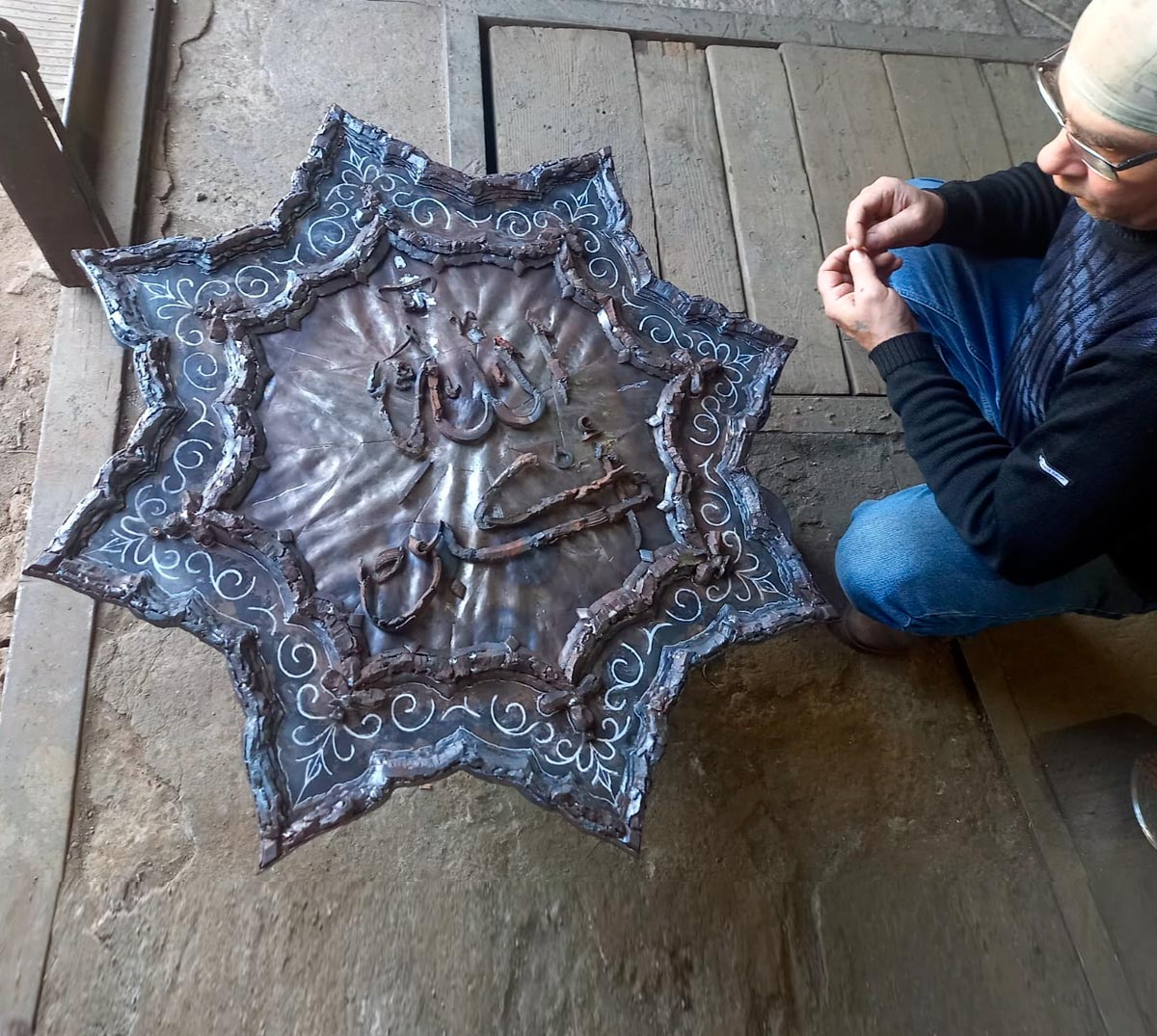
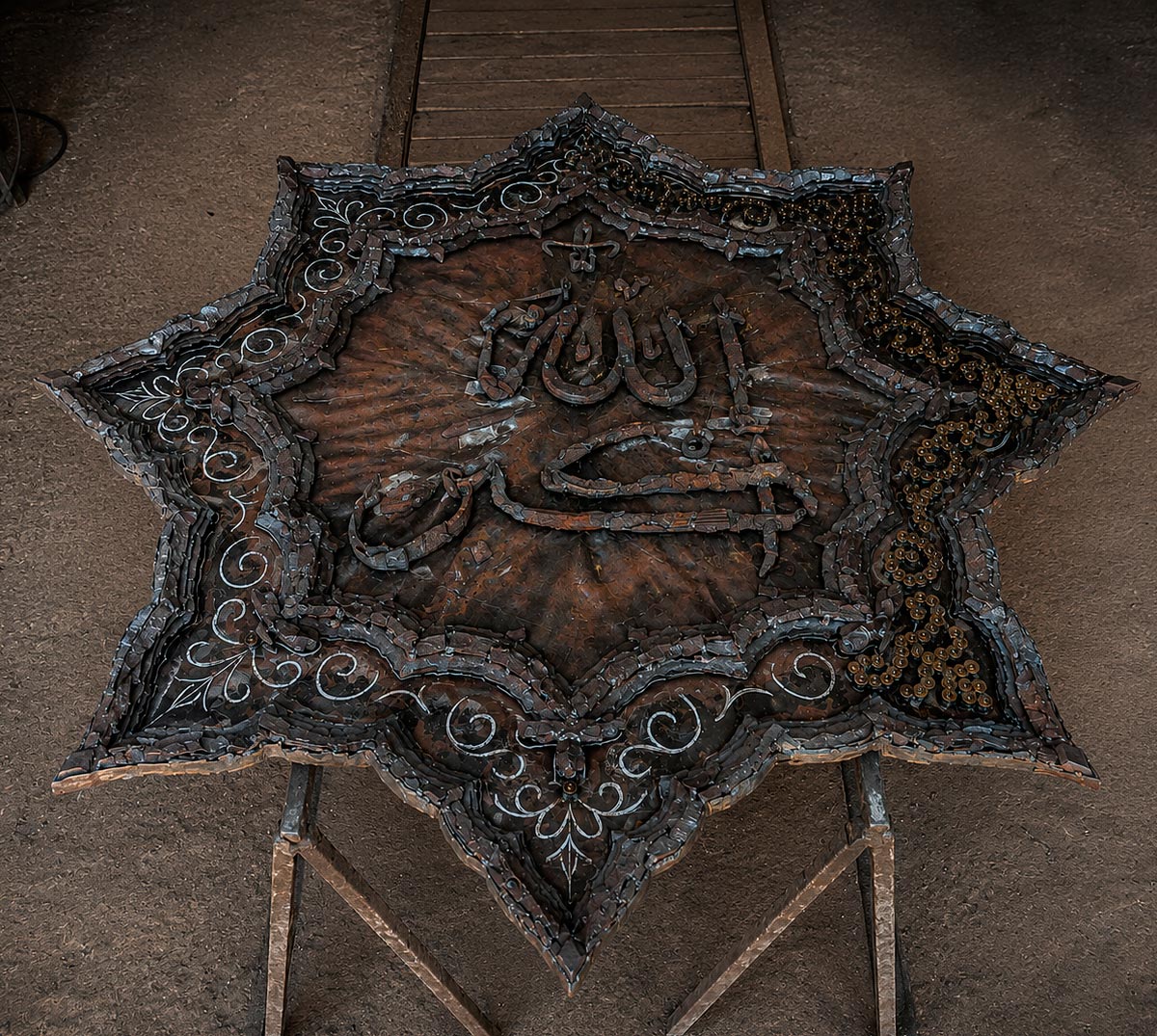
Allahu Akbar during assembly in Odesa, Ukraine, before undergoing gilding and nickel finishing.
Lorem ipsum dolor sit amet, consectetur adipiscing elit, sed do eiusmod tempor incididunt ut labore et dolore magna aliqua.
Lorem ipsum dolor sit amet, consectetur adipiscing elit, sed do eiusmod tempor incididunt ut labore et dolore magna aliqua.
Lorem ipsum dolor sit amet, consectetur adipiscing elit, sed do eiusmod tempor incididunt ut labore et dolore magna aliqua.
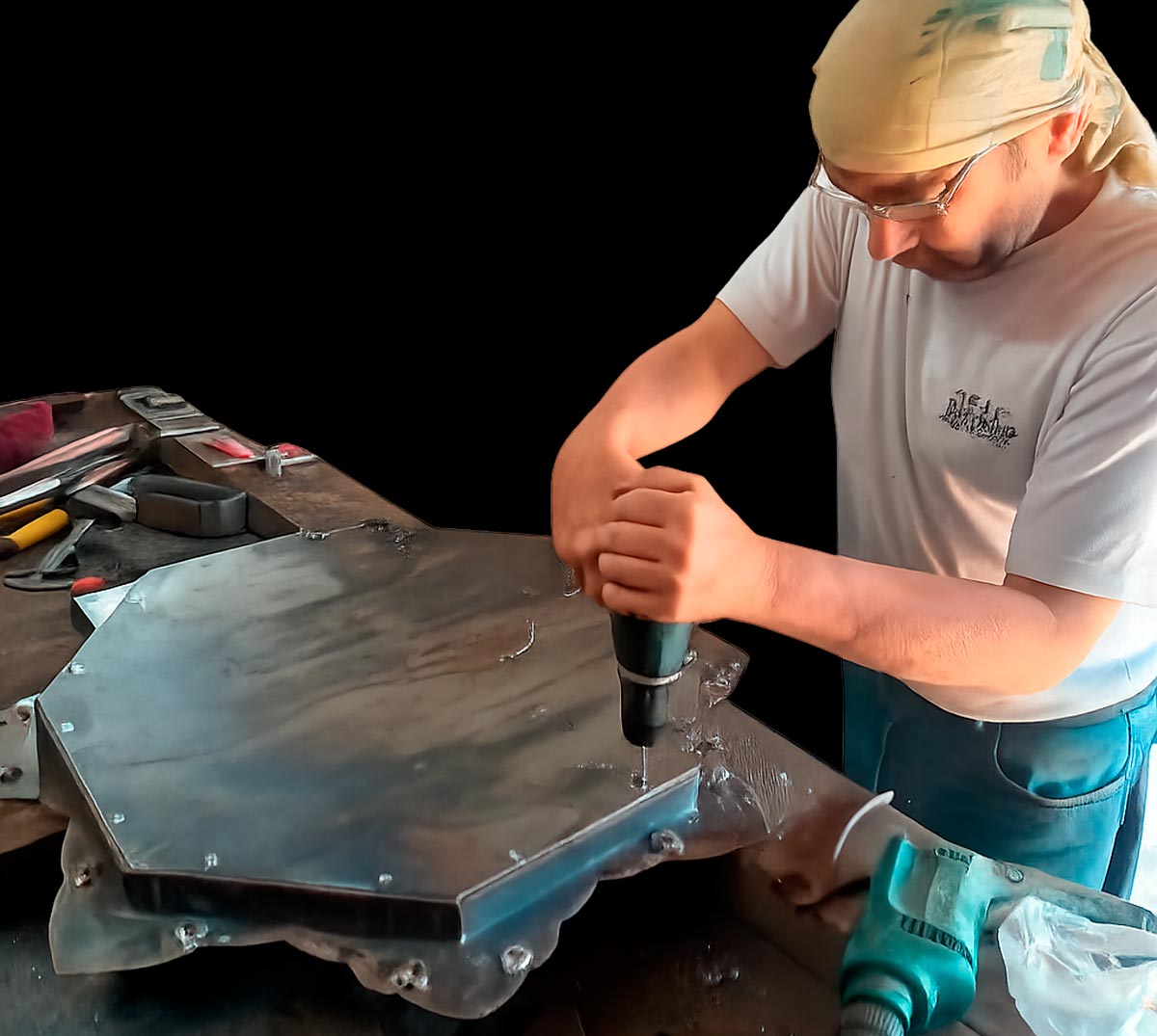
Installation of the rear panel on the sculptural composition Allahu Akbar.
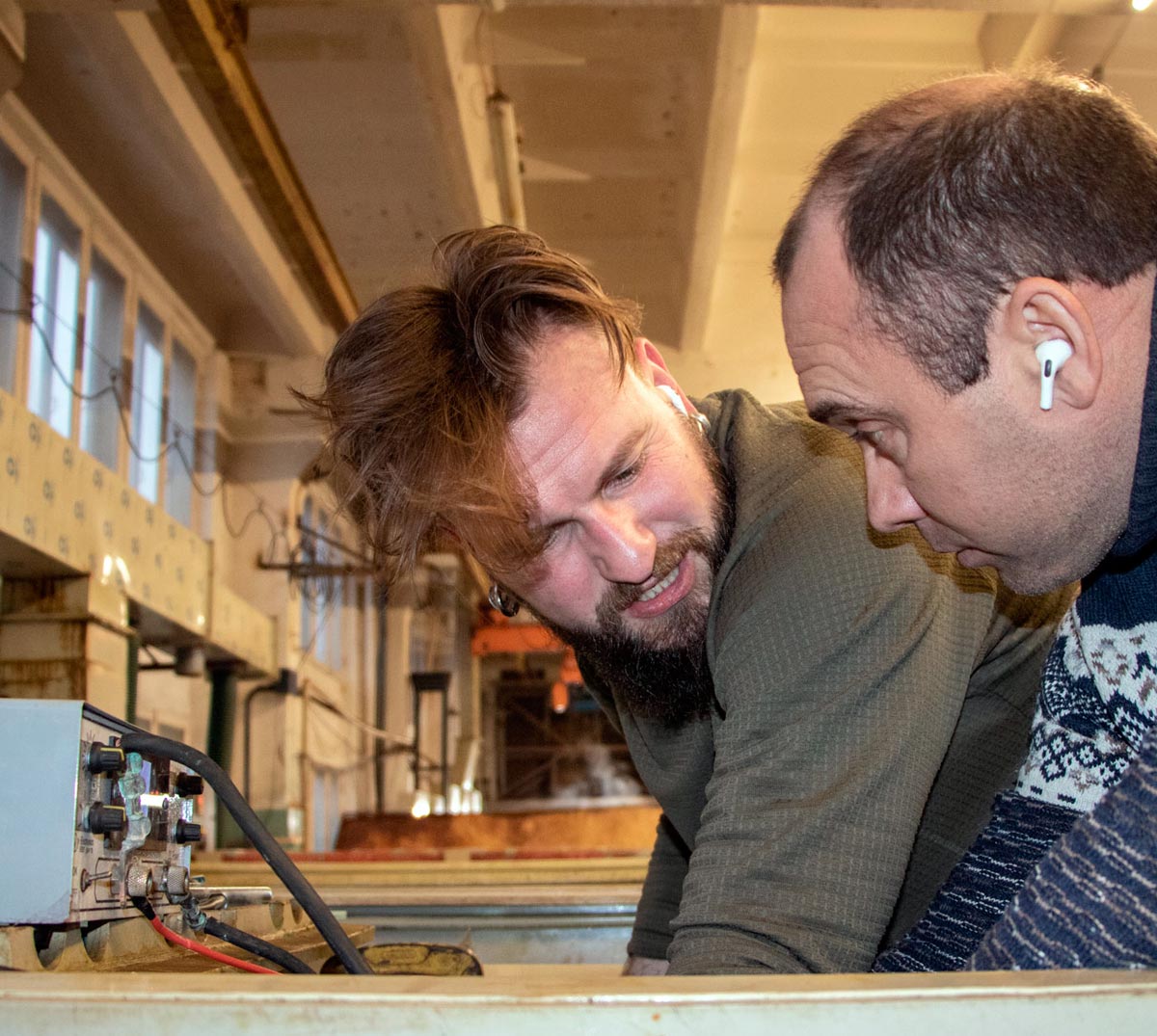
Sergey Naumenko and Vitalii Zhuk, the leading specialists of Metall Chemie, responsible for the final stage of electroplating Allahu Akbar with gold and nickel alloys.